



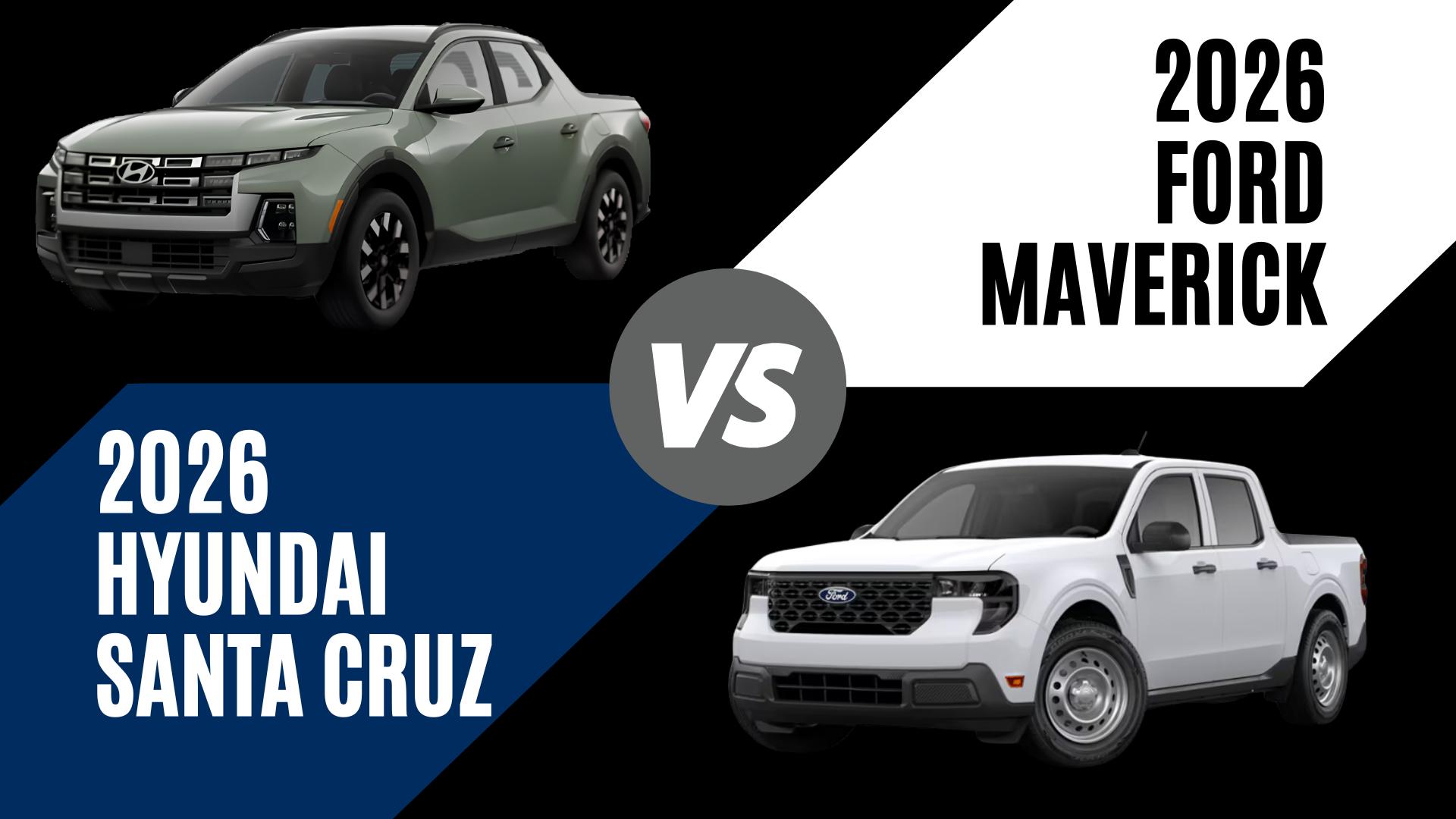
Which Compact Truck Offers the Better Blend of Capability and Everyday Comfort?
Not every truck buyer needs a full-size pickup. Many drivers want the versatility of an open bed, useful towing capability, and available all-wheel drive without sacrificing ride quality, fuel economy, or daily comfort. That’s exactly why compact trucks like the 2026 Hyundai Santa Cruz and 2026 Ford Maverick have become increasingly popular.
Shoppers comparing the 2026 Hyundai Santa Cruz and 2026 Ford Maverick will quickly notice that these compact trucks prioritize different strengths. The Maverick emphasizes affordability and efficiency, while the Santa Cruz combines truck capability with the comfort, refinement, and technology features many drivers expect from a modern SUV.
Drivers exploring Hyundai’s versatile pickup can also see how it compares to another popular truck alternative, such as the Honda Ridgeline, before making a final decision.
Vehicle Comparison
2026 Hyundai Santa Cruz
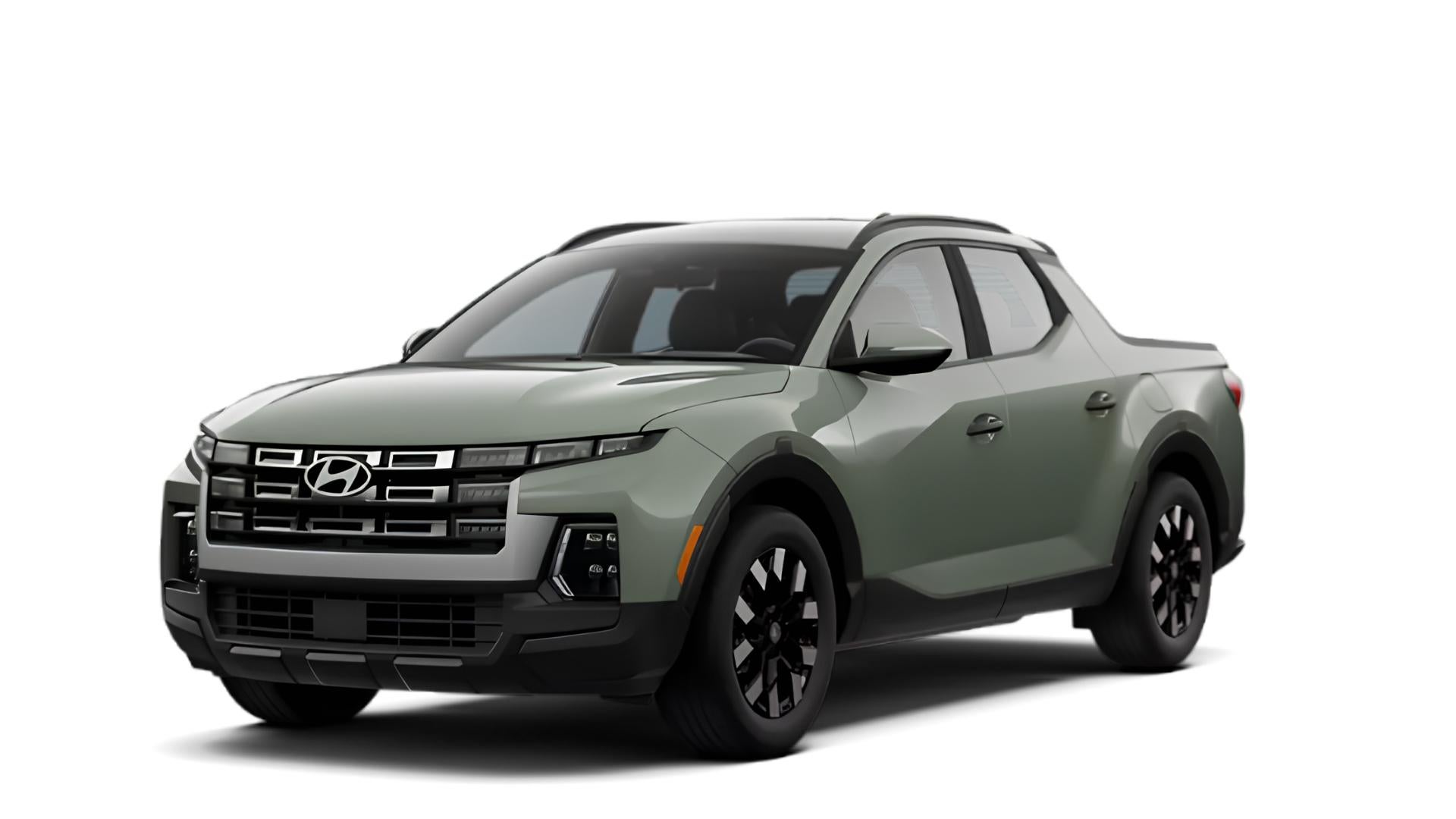
- Available 281-hp Turbo Engine
- Hyundai Digital Key 2
- In-Bed Storage + Integrated Tonneau Cover
2026 Ford Maverick
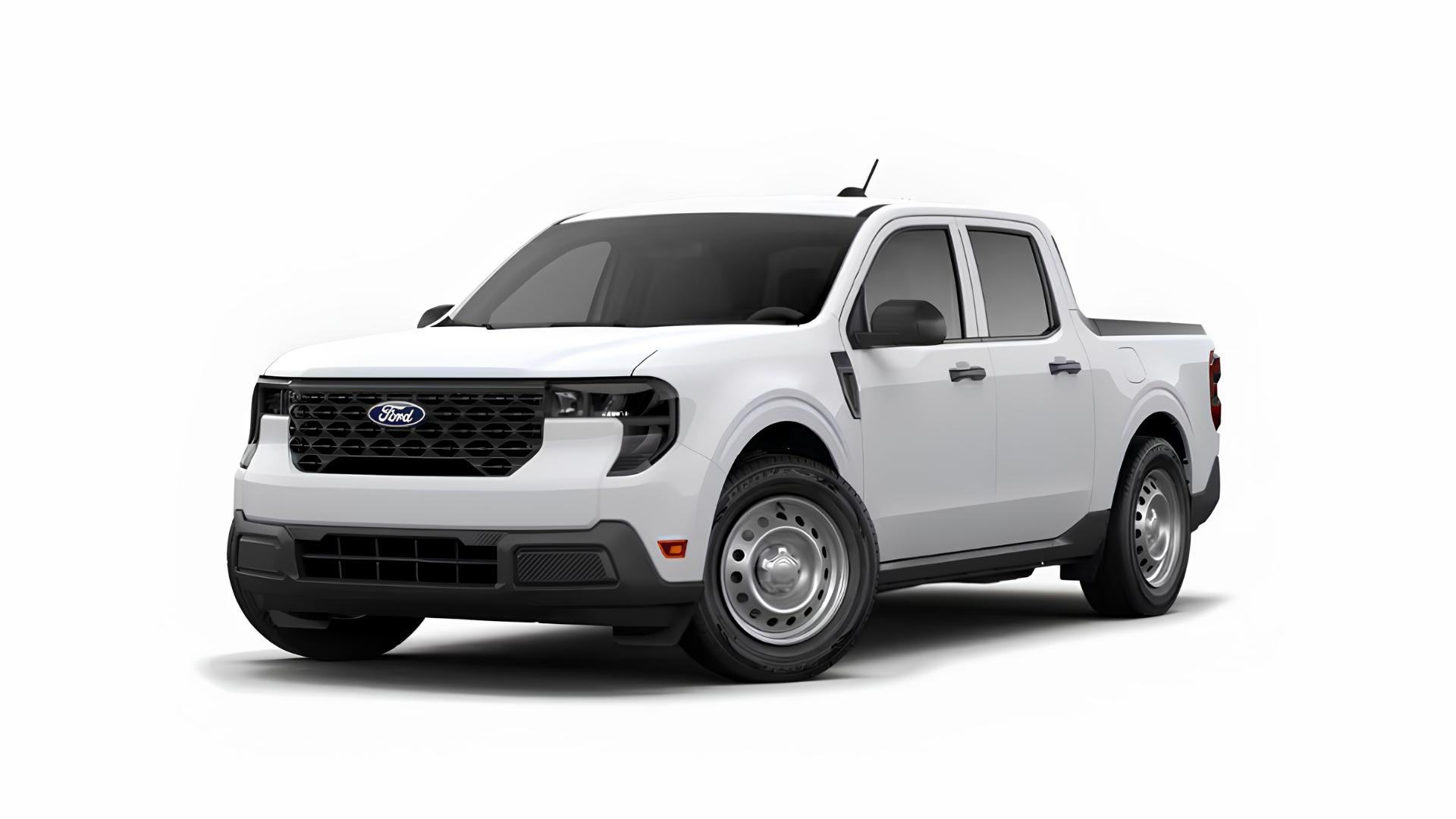
- Available Hybrid Powertrain
- 13.2″ Touchscreen
- FLEXBED Storage System
The Santa Cruz Brings More Style to the Compact Truck Segment
One of the first things buyers notice is how differently these vehicles approach design.
The Santa Cruz doesn’t look like a traditional pickup truck. Hyundai blends SUV-inspired proportions with truck functionality, creating a vehicle that feels equally comfortable in downtown Fayetteville, on a weekend road trip, or heading toward the trails and outdoor destinations that make Northwest Arkansas so popular.
The Maverick embraces a more conventional truck appearance. Its upright design, squared-off lines, and practical styling communicate utility first and foremost.
Both trucks remain highly functional, but the Santa Cruz feels more modern and distinctive.
Design Highlights
- Santa Cruz: Sport-inspired styling with SUV-like refinement
- Maverick: Traditional compact truck design
- Hyundai: More premium overall appearance
Stronger Performance Helps the Santa Cruz Feel More Confident
Powertrain options play a major role in separating these trucks.
The Santa Cruz offers two gasoline-powered engines, including an available turbocharged engine producing up to 281 horsepower. That additional power creates confident acceleration when merging onto highways, passing slower traffic, or towing recreational equipment.
Ford offers multiple Maverick powertrains as well, including a hybrid option for buyers focused primarily on maximizing efficiency. However, shoppers who prioritize stronger performance may find the Santa Cruz’s available turbocharged engine especially appealing.
Ride quality also favors Hyundai’s approach. Because the Santa Cruz shares more DNA with modern crossovers than traditional pickups, it delivers a smoother and quieter driving experience during daily use.
Performance Comparison
- Santa Cruz: Available 281-hp turbocharged engine
- Maverick: Available hybrid powertrain focused on efficiency
- Both: Available AWD and everyday versatility
Interior Comfort Makes the Santa Cruz Feel More Upscale
Many compact truck buyers spend far more time commuting than hauling cargo, making interior comfort an important part of the ownership experience.
The Santa Cruz features a cabin that feels remarkably similar to Hyundai’s SUV lineup. Quality materials, thoughtful design, and a quieter ride help create a premium atmosphere that exceeds what many shoppers expect from a compact truck.
The Maverick focuses more heavily on practicality. Storage solutions and durable materials support its utility-focused mission, while higher trims add additional comfort features.
Both trucks offer seating for five passengers, but the Santa Cruz places greater emphasis on refinement and long-distance comfort.
Interior Advantages
- Santa Cruz: Premium cabin feel and quieter ride
- Maverick: Functional design with practical storage
- Both: Comfortable seating for five
Modern Technology Supports Everyday Convenience
Technology has become a major consideration for today’s truck shoppers.
The Santa Cruz offers a 12.3-inch touchscreen along with available digital displays that create a modern and cohesive dashboard layout. Hyundai also continues expanding connected convenience features, including Digital Key technology that allows compatible smartphones to access and operate the vehicle.
The Maverick counters with a larger standard 13.2-inch touchscreen and straightforward infotainment controls that many drivers will find easy to use.
Wireless smartphone connectivity remains available on both trucks, helping drivers stay connected whether they’re commuting across Fayetteville or heading out for a weekend adventure.
Technology Highlights
- Santa Cruz: Digital Key 2 and available dual-screen layout
- Maverick: Standard 13.2-inch touchscreen
- Both: Wireless smartphone connectivity
Safety Technology Remains a Priority
Advanced driver-assistance systems continue to play an increasingly important role in vehicle shopping decisions.
The Santa Cruz includes Hyundai SmartSense, a collection of technologies designed to improve awareness and confidence behind the wheel. Drivers can learn more about Hyundai SmartSense safety technology and how these features help support everyday driving.
Available features include adaptive cruise control, blind-spot monitoring, lane-keeping assistance, and automatic emergency braking.
Hyundai also offers advanced driver-assistance technologies such as Highway Driving Assist 2, which helps reduce driver workload during longer highway trips.
The Maverick offers a competitive collection of modern safety features as well, including automatic emergency braking and lane-keeping assistance.
Safety Comparison
- Santa Cruz: Hyundai SmartSense and Highway Driving Assist technologies
- Maverick: Modern driver-assistance systems
- Both: Advanced safety features designed for daily driving
Utility and Towing Capability Separate These Trucks
Truck shoppers naturally want to know what these vehicles can do when it’s time to work.
The Santa Cruz offers innovative cargo solutions, including integrated in-bed storage compartments and an available lockable tonneau cover that helps improve both security and practicality. Drivers interested in learning more about Hyundai’s compact truck can explore additional capability features. When properly equipped, turbocharged Santa Cruz models can tow up to 5,000 pounds.
The Maverick offers its FLEXBED system, providing customizable cargo solutions that help maximize utility. It also features a slightly longer bed measuring approximately 4.5 feet compared to the Santa Cruz’s 4-foot bed. Maximum towing capacity reaches 4,000 pounds when properly equipped.
Capability Snapshot
- Santa Cruz: Up to 5,000 pounds towing and innovative bed storage
- Maverick: FLEXBED system and 4.5-foot bed
- Both: Practical compact trucks built for everyday versatility
Fuel Economy Favors the Maverick
Efficiency remains one of the Maverick’s strongest selling points.
Depending on configuration, gas-powered Maverick models achieve approximately 22 to 30 MPG combined. Ford also offers a separate hybrid variant for buyers focused on maximizing fuel economy.
The Santa Cruz delivers approximately 20 to 25 MPG combined while prioritizing stronger performance, greater towing capability, and a more refined driving experience.
For some buyers, the Maverick’s efficiency advantage may outweigh other considerations. For others, the Santa Cruz’s balance of comfort, capability, and performance will prove more compelling.
Fuel Economy Overview
- Santa Cruz: 20–25 MPG combined
- Maverick: Approximately 22–30 MPG combined
- Ford: Available hybrid option for maximum efficiency
Hyundai Continues to Lead in Long-Term Ownership Value
Vehicle ownership extends well beyond the initial purchase, making warranty coverage an important consideration.
Hyundai continues to offer one of the strongest ownership programs in the automotive industry. Buyers can learn more about America’s Best Warranty and how Hyundai’s coverage helps provide additional long-term confidence.
Ford offers a more traditional warranty structure and competitive pricing across much of the Maverick lineup, but it does not match Hyundai’s ownership benefits and complimentary maintenance coverage.
Ownership Value Highlights
- Santa Cruz: Longer warranty coverage and complimentary maintenance
- Maverick: Competitive pricing and strong efficiency
- Hyundai: Greater long-term ownership support
Which Compact Truck Fits Fayetteville Drivers Best?
The Ford Maverick remains a smart option for buyers who prioritize fuel economy, affordability, and traditional compact truck utility.
To many Fayetteville drivers, however, the 2026 Hyundai Santa Cruz delivers a more complete overall package. Its available 281-horsepower turbocharged engine, premium interior, innovative cargo solutions, advanced technology, and stronger towing capability create a truck that feels equally comfortable as a daily driver and a weekend adventure vehicle.
Drivers seeking pickup versatility without sacrificing comfort, refinement, and modern convenience will find the Santa Cruz stands out in the growing compact truck segment.
Ready to experience the 2026 Hyundai Santa Cruz in person? Visit Crain Hyundai of Fayetteville to explore available trims and features today.
FAQs
Is the Hyundai Santa Cruz more like an SUV or a truck?
The Santa Cruz blends pickup capability with SUV-like comfort, ride quality, and technology, creating a unique alternative to traditional compact trucks.
Which compact truck is better for towing recreational equipment?
When properly equipped, the Santa Cruz can tow up to 5,000 pounds, making it a strong choice for small campers, utility trailers, boats, and outdoor gear.
Why do some drivers choose the Ford Maverick over the Santa Cruz?
Many Maverick buyers are attracted to its higher fuel economy and available hybrid powertrain, while Santa Cruz buyers often prioritize performance, comfort, and premium features.
2026 Hyundai Kona vs Honda HR-V in Fayetteville, AR
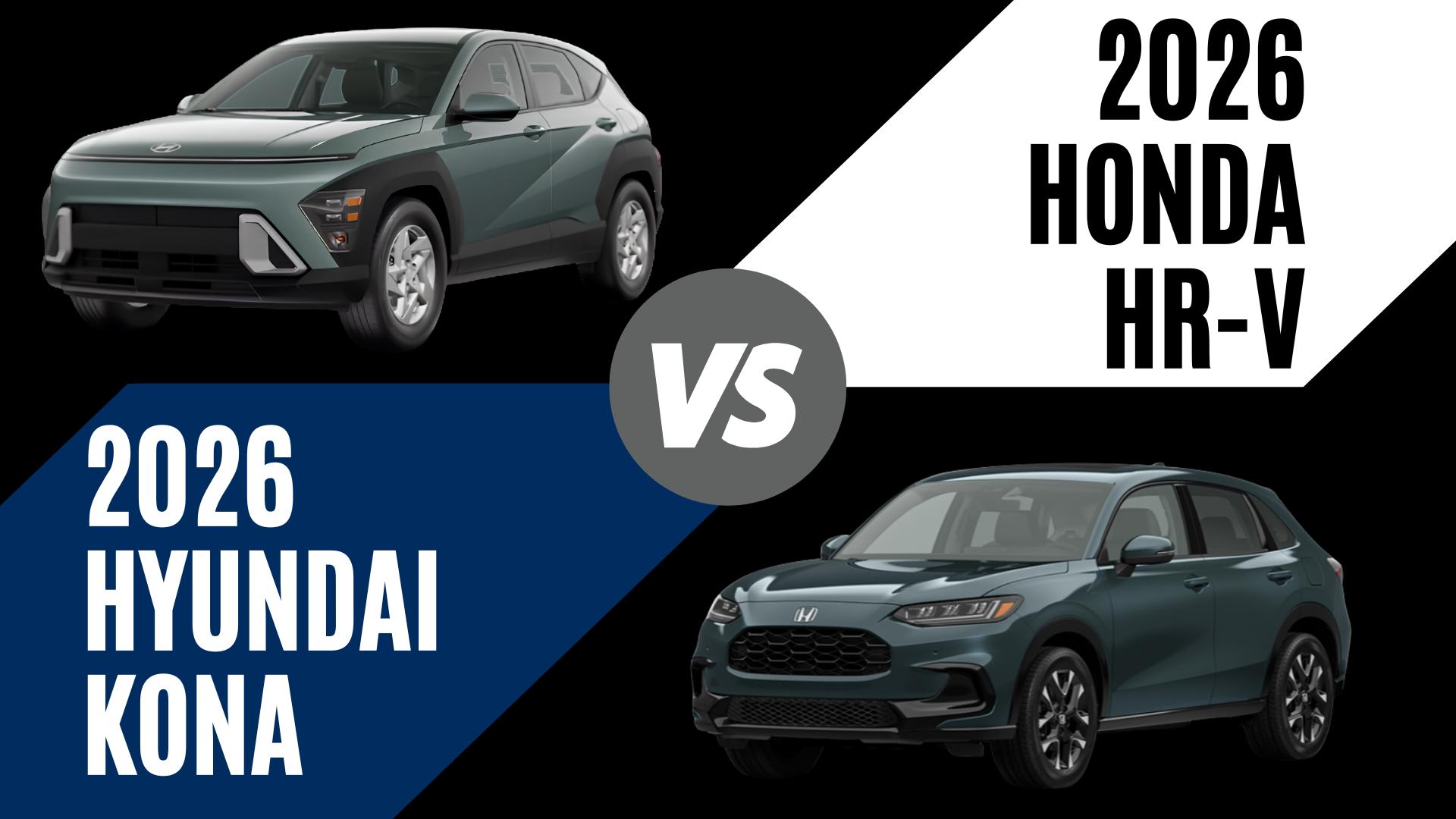
Looking Beyond the Spec Sheet
Choosing between the 2026 Hyundai Kona and 2026 Honda HR-V isn’t always as straightforward as it might seem. Both occupy a similar space in the market, offering compact dimensions, seating for five, available all-wheel drive, and the versatility that has made small SUVs one of the fastest-growing vehicle segments.
The similarities are easy to spot. The differences require a closer look.
Performance, technology, interior design, and long-term ownership costs separate these two SUVs more than their size or fuel economy figures. For drivers in Fayetteville and throughout Northwest Arkansas, those distinctions can have a bigger impact on daily life than a simple horsepower or MPG number.
Vehicle Comparison
2026 Hyundai Kona
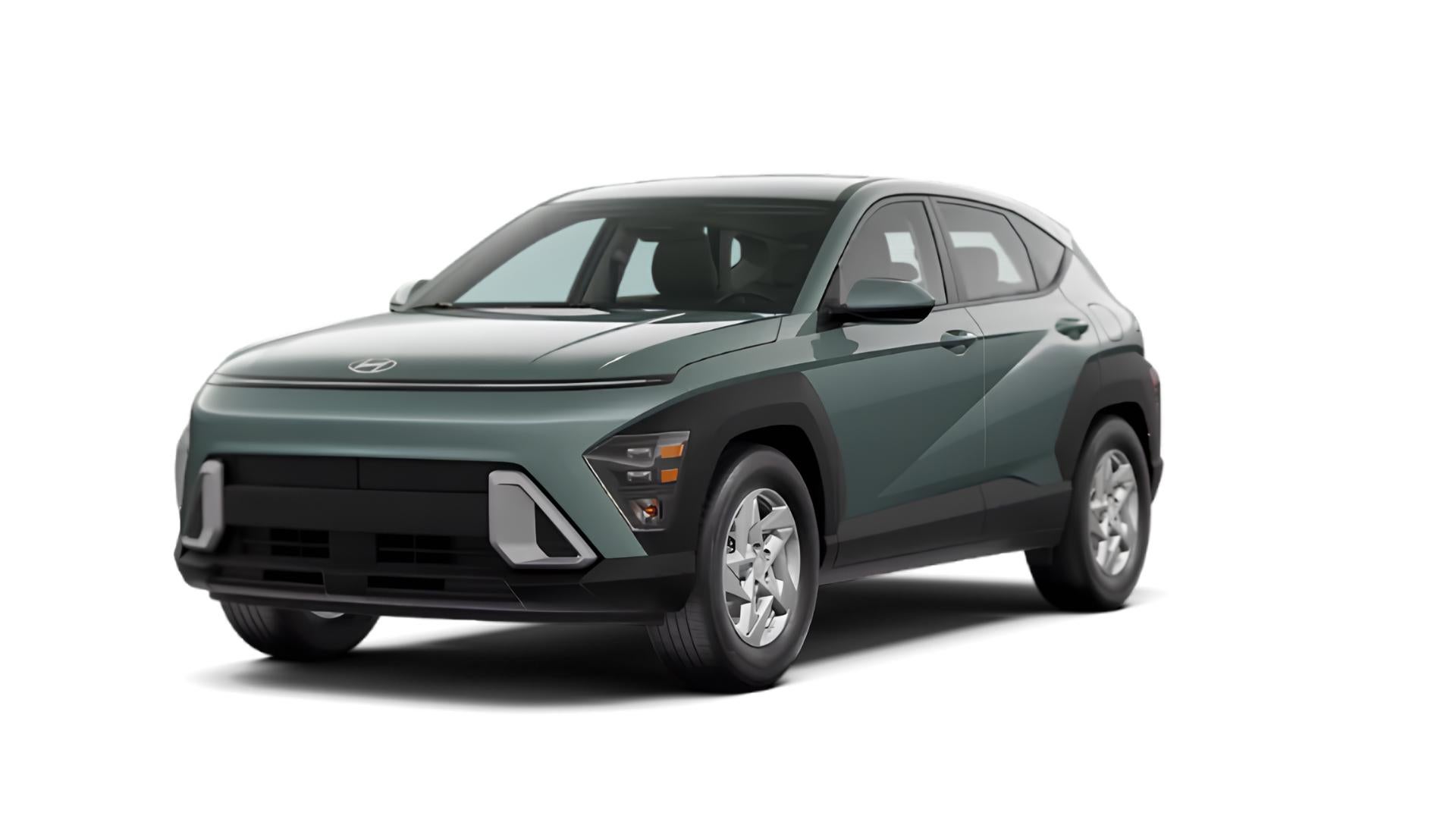
- 12.3-Inch Touchscreen
- Available 190-hp Turbo Engine
- Hyundai Digital Key
2026 Honda HR-V

- 9-Inch Touchscreen
- Honda Sensing Safety Suite
- Practical Cargo Flexibility
Which SUV Feels More Modern?
First impressions matter, and these vehicles create very different ones.
Hyundai designed the Kona to stand out. Sharp styling, distinctive lighting signatures, and a more futuristic overall appearance help create a vehicle that feels like it belongs to a newer generation of compact SUVs. The interior follows a similar philosophy, emphasizing digital displays and a cleaner dashboard layout.
Honda takes a more traditional approach. The HR-V’s styling is understated and practical, with an interior focused on simplicity and ease of use rather than making a bold visual statement.
The same difference carries over into technology. An available 12.3-inch touchscreen gives the Kona a more upscale feel, while the HR-V relies on a smaller 9-inch display and a more conventional interface.
Hyundai Digital Key technology adds another layer of convenience by allowing owners to access certain vehicle functions directly from their smartphone.
What stands out:
- Kona: Modern styling and available 12.3-inch touchscreen
- HR-V: Traditional design and 9-inch touchscreen
- Both: User-friendly layouts designed for daily driving
Does Extra Horsepower Make a Difference?
Horsepower figures don’t always tell the whole story, but they do help explain why these SUVs feel different on the road.
The HR-V uses a 158-horsepower engine that prioritizes consistency and efficiency. Around town, it performs its job well and delivers the predictable driving characteristics many Honda owners appreciate.
The Kona gives buyers more options. In addition to its standard engine, Hyundai offers an available turbocharged powertrain producing up to 190 horsepower. That additional power becomes noticeable during highway merging, passing slower traffic, and accelerating with passengers or cargo onboard.
With its available turbocharged engine, the Kona stands out not only against the HR-V but also against other popular small SUVs like the Subaru Crosstrek.
Performance Takeaways:
- Kona: Available 190-hp turbocharged engine
- HR-V: 158-hp engine focused on everyday efficiency
- Both: Available AWD for additional traction
Which Cabin Works Better for Everyday Life?
Most compact SUV buyers spend far more time inside their vehicle than looking at it from the outside.
Cargo flexibility, storage space, passenger comfort, and overall usability often determine how satisfied owners remain after the excitement of a new purchase wears off.
Hyundai makes strong use of the Kona’s footprint, creating a cabin that feels open and contemporary while maintaining practical storage throughout the interior. Cargo space remains useful for errands, road trips, and everyday tasks around Northwest Arkansas.
Families looking for practical storage, passenger comfort, and everyday versatility will find many of the same family-friendly features that appear throughout Hyundai’s SUV lineup.
The HR-V approaches interior design differently. Honda focuses heavily on straightforward functionality, giving drivers intuitive controls and a layout that feels immediately familiar.
Interior Highlights:
- Kona: Modern cabin and versatile cargo area
- HR-V: Functional design and intuitive controls
- Both: Seating for five passengers
Comparing Safety and Driver Assistance Technology
Safety technology has become one of the most competitive areas in the automotive industry, and both manufacturers equip these SUVs with an impressive collection of driver-assistance features.
The Kona offers adaptive cruise control, lane-centering assist, blind-spot monitoring, and automatic emergency braking. Hyundai continues to expand these technologies throughout its lineup while improving overall usability.
Learn more about Hyundai SmartSense safety features that continue to support driver confidence on everyday commutes and advanced highway-driving technology available on modern Hyundai models.
Honda’s Honda Sensing suite includes adaptive cruise control, lane-keeping assist, and automatic emergency braking. The system remains one of the most recognized safety packages in the segment.
Safety Snapshot:
- Kona: Broader available driver-assistance technology
- HR-V: Honda Sensing standard safety suite
- Both: Advanced active safety features
Efficiency Without Giving Up Flexibility
Fuel economy remains an important consideration, especially for commuters traveling throughout Fayetteville, Springdale, Rogers, and Bentonville.
The Kona delivers approximately 26 to 31 MPG combined, depending on engine and drivetrain configuration. What makes Hyundai’s approach unique is the ability to pair competitive fuel economy with an available performance upgrade.
The HR-V returns approximately 27 to 28 MPG combined while maintaining a simpler powertrain lineup. Drivers who prioritize straightforward operation may appreciate that simplicity, while others may prefer having additional choices available.
Drivers interested in fuel-efficient Hyundai models can also explore additional fuel-conscious options available throughout the Hyundai lineup.
Efficiency Overview:
- Kona: Strong MPG with available performance upgrades
- HR-V: Competitive efficiency and simple operation
- Both: Practical daily fuel economy
Looking Beyond the Purchase Price
The ownership experience doesn’t end when the paperwork is signed.
Warranty coverage, maintenance costs, and long-term value can have just as much influence on ownership satisfaction as the vehicle itself.
This is an area where Hyundai continues to separate itself from many competitors. Complimentary maintenance and extensive warranty coverage provide additional value long after the vehicle leaves the dealership.
For many shoppers, America’s Best Warranty continues to be one of Hyundai’s strongest ownership advantages.
Honda’s reputation for long-term reliability remains one of the HR-V’s strongest selling points, but Hyundai’s ownership package makes a compelling case for the Kona.
Ownership Considerations:
- Kona: Longer warranty coverage and complimentary maintenance
- HR-V: Strong reputation for reliability
- Both: Solid long-term ownership potential
Which Small SUV Makes More Sense for Fayetteville Drivers?
The HR-V succeeds by keeping things simple. It delivers practical transportation, competitive efficiency, and the familiarity that has helped Honda build a loyal following.
The Kona takes a broader approach. More available horsepower, more advanced technology, a more distinctive design, and stronger ownership benefits create an SUV that feels like it’s offering more than basic transportation.
For many shoppers throughout Fayetteville and Northwest Arkansas, that combination makes the 2026 Hyundai Kona the more complete overall package.
FAQs
Which SUV offers more available horsepower?
The Hyundai Kona offers an available 190-horsepower turbocharged engine, while the Honda HR-V produces 158 horsepower.
Does the Hyundai Kona offer a larger touchscreen?
Yes. The Kona offers an available 12.3-inch touchscreen, while the Honda HR-V uses a 9-inch display.
Which SUV provides better long-term ownership value?
Both vehicles offer strong value, but the Kona adds longer warranty coverage and complimentary maintenance that can help reduce ownership costs over time.
Hyundai Safety Awards: Hyundai Continues to Earn Top Safety Honors as IIHS Raises the Bar for 2026
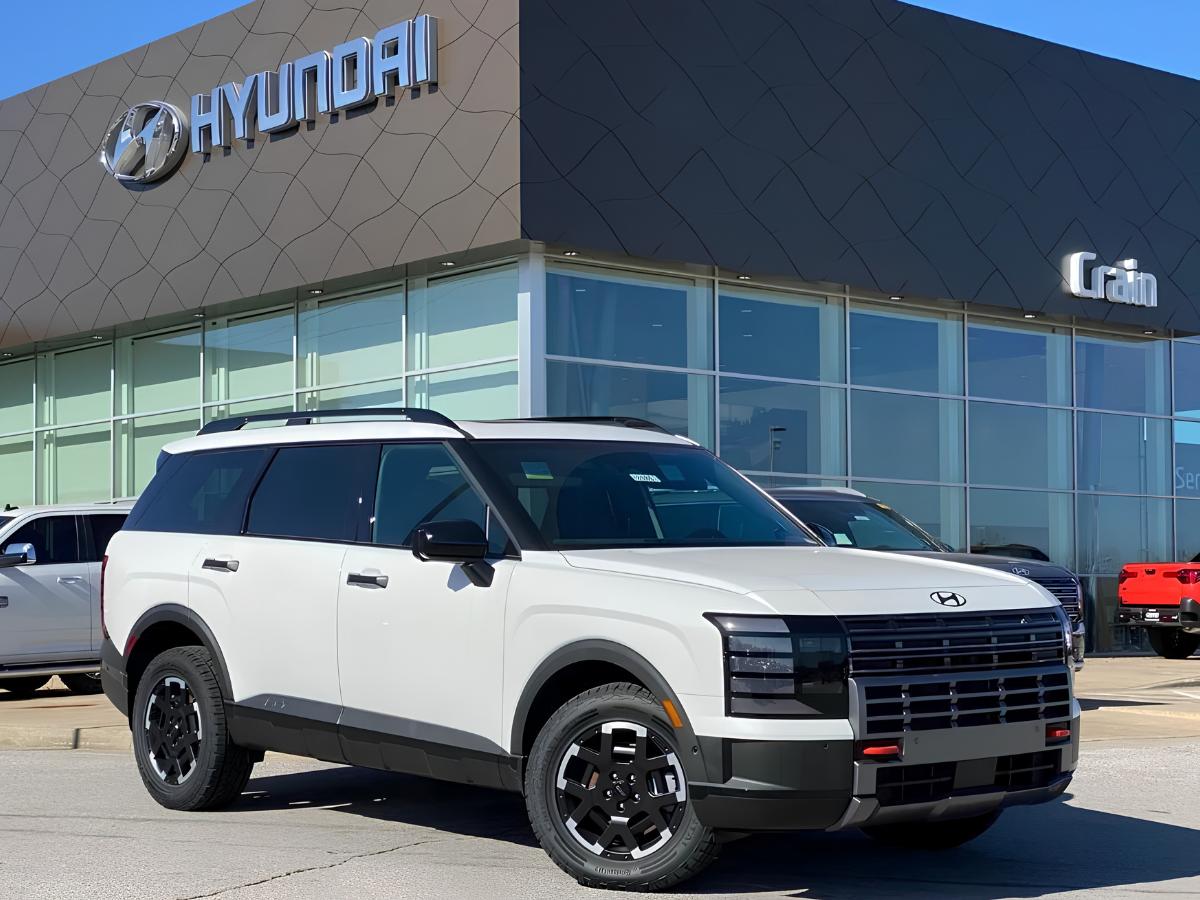
Hyundai safety awards continue to highlight the brand’s commitment to protecting drivers and passengers. For 2026, Hyundai earned eight IIHS safety awards across its lineup, including a prestigious Top Safety Pick+ award for the all-new Hyundai Palisade.
When it comes to vehicle safety, earning recognition from the Insurance Institute for Highway Safety (IIHS) is no easy task. The organization’s Top Safety Pick and Top Safety Pick+ awards are among the most respected honors in the automotive industry, and the requirements become more demanding almost every year.
That’s what makes Hyundai’s latest achievement so impressive.
For drivers in Fayetteville and throughout Northwest Arkansas, Hyundai’s continued success under tougher standards is another sign that safety remains a priority across the brand’s lineup.
Hyundai’s 2026 IIHS Award Winners
Hyundai earned recognition across a variety of vehicle segments, from family SUVs and electric vehicles to sedans and compact crossovers.
2026 IIHS Top Safety Pick+ Winners
- Hyundai Palisade
- Hyundai IONIQ 5
- Hyundai IONIQ 9
- Hyundai Sonata
- Hyundai Kona
- Hyundai Tucson
- Hyundai Santa Fe
2026 IIHS Top Safety Pick Winner
- Hyundai Elantra
The wide range of vehicles earning recognition demonstrates Hyundai’s commitment to safety across its lineup rather than focusing on a single standout model.
Why These Awards Matter More in 2026
Safety awards are always noteworthy, but this year’s recognitions carry extra weight because IIHS increased its requirements.
For 2026, vehicles seeking a Top Safety Pick+ award had to perform well in several demanding categories, including:
- Moderate front overlap crash testing
- Small overlap front crash testing
- Side-impact testing
- Pedestrian crash prevention evaluations
- Updated vehicle-to-vehicle crash prevention testing
- Headlight performance assessments
- Rear-seat occupant protection
One of the biggest changes focuses on passengers in the second row. IIHS has placed greater emphasis on protecting rear-seat occupants during collisions, requiring manufacturers to improve performance in areas that weren’t scrutinized as heavily in previous years.
In other words, earning a safety award today requires more than simply performing well in a traditional crash test. Automakers must demonstrate strong protection for occupants throughout the vehicle while also equipping vehicles with advanced technology designed to help prevent accidents in the first place.
The All-New Hyundai Palisade Leads the Way
Among Hyundai’s award winners, the all-new 2026 Hyundai Palisade stands out.
Built after November 2025, the redesigned Palisade earned the organization’s highest honor: the 2026 IIHS Top Safety Pick+ award.
The Palisade received strong marks across every major evaluation category, including:
- Moderate front overlap crash testing
- Small overlap front crash testing
- Side-impact protection
- Pedestrian front crash prevention
- Vehicle-to-vehicle front crash prevention
IIHS specifically praised Hyundai’s efforts to improve protection for second-row passengers, an area receiving increased attention under the organization’s updated testing procedures.
For families throughout Fayetteville, Springdale, Johnson, Farmington, and the surrounding area, those improvements help reinforce the Palisade’s reputation as one of Hyundai’s most family-friendly SUVs.
Beyond safety, many drivers appreciate the Palisade’s available towing capability for boats, campers, and weekend adventures throughout Arkansas.
Safety Recognition Across SUVs, EVs, and Sedans
One of the most impressive aspects of Hyundai’s 2026 IIHS performance is the variety of vehicles recognized.
Hyundai didn’t earn awards in just one category. Instead, vehicles across multiple segments received recognition.
The lineup includes:
- Three-row family SUVs like the Palisade and Santa Fe
- Compact SUVs like the Tucson and Kona
- Electric vehicles like the IONIQ 5 and IONIQ 9
- Sedans like the Sonata and Elantra
That consistency suggests Hyundai’s safety efforts extend throughout the lineup rather than being limited to a handful of flagship vehicles.
Whether drivers are searching for a commuter-friendly sedan, an all-electric SUV, or a vehicle capable of handling family adventures across Northwest Arkansas, Hyundai offers options that meet some of the industry’s most demanding safety standards.
Hyundai IONIQ 5 Continues to Earn Recognition
The Hyundai IONIQ 5’s Top Safety Pick+ award adds to a growing list of accomplishments for Hyundai’s electric vehicle lineup.
The IONIQ 5 has also attracted attention for its growing charging convenience, helping make EV ownership more practical for drivers across Northwest Arkansas.
Its continued EV recognition highlights Hyundai’s commitment to combining innovation, efficiency, and safety in one package.
The Elantra Continues to Stand Out
The 2026 Hyundai Elantra earned a 2026 IIHS Top Safety Pick award, demonstrating that Hyundai’s commitment to safety extends beyond SUVs and EVs.
The Elantra remains one of Hyundai’s most popular sedans thanks to its balance of efficiency, technology, and value. Many Fayetteville drivers compare it against competitors like the Honda Civic before deciding which compact sedan best fits their needs.
Tucson Remains a Strong Contender
The Hyundai Tucson also earned a 2026 Top Safety Pick+ award, further strengthening Hyundai’s SUV lineup.
Drivers frequently compare the Tucson against other segment leaders such as the Honda CR-V when researching compact SUVs. Consistent safety recognition helps explain why the Tucson continues to be one of Hyundai’s most popular models.
Hyundai SmartSense Helps Support a Safer Drive
Another factor contributing to Hyundai’s safety success is the brand’s continued investment in driver-assistance technology.
Every 2026 Hyundai model includes six standard Hyundai SmartSense safety features:
- Lane Departure Warning
- Lane Keep Assist
- Driver Attention Warning
- Forward Collision-Avoidance Assist with Pedestrian Detection
- Rear Occupant Alert
- High Beam Assist
These technologies are designed to help drivers stay aware of potential hazards, avoid collisions, and provide additional confidence behind the wheel.
Winning Once Is Impressive. Doing It Across the Lineup Is Different.
A single vehicle earning a safety award is certainly an accomplishment.
Eight awards earned across multiple vehicle categories tells a bigger story.
IIHS continues to raise its standards, placing greater emphasis on crash avoidance systems, rear-seat protection, and real-world crash performance. Despite those tougher requirements, Hyundai once again earned recognition across much of its lineup.
The 2026 Palisade’s Top Safety Pick+ award may be grabbing headlines, but it’s part of a larger trend. From the IONIQ 5 and IONIQ 9 to the Tucson, Kona, Santa Fe, Sonata, and Elantra, Hyundai continues to demonstrate a commitment to safety throughout its vehicle portfolio.
For shoppers in Fayetteville and across Northwest Arkansas, that’s an encouraging sign. It means drivers don’t have to choose between safety, technology, comfort, and value. Hyundai continues working to deliver all of those qualities in one package.
FAQ
What is the difference between IIHS Top Safety Pick and Top Safety Pick+?
Top Safety Pick+ is the highest safety award given by IIHS. Vehicles must meet stricter crashworthiness, crash prevention, headlight, and occupant protection requirements than those needed for a standard Top Safety Pick award.
Which Hyundai vehicles earned Top Safety Pick+ awards for 2026?
The 2026 Hyundai Palisade, IONIQ 5, IONIQ 9, Sonata, Kona, Tucson, and Santa Fe all earned IIHS Top Safety Pick+ awards.
Which Hyundai earned a Top Safety Pick award for 2026?
The 2026 Hyundai Elantra received an IIHS Top Safety Pick award.
Why did IIHS safety awards become more difficult to earn in 2026?
IIHS increased its requirements to place greater emphasis on rear-seat passenger protection, crash avoidance systems, pedestrian safety, and updated vehicle-to-vehicle crash prevention testing.
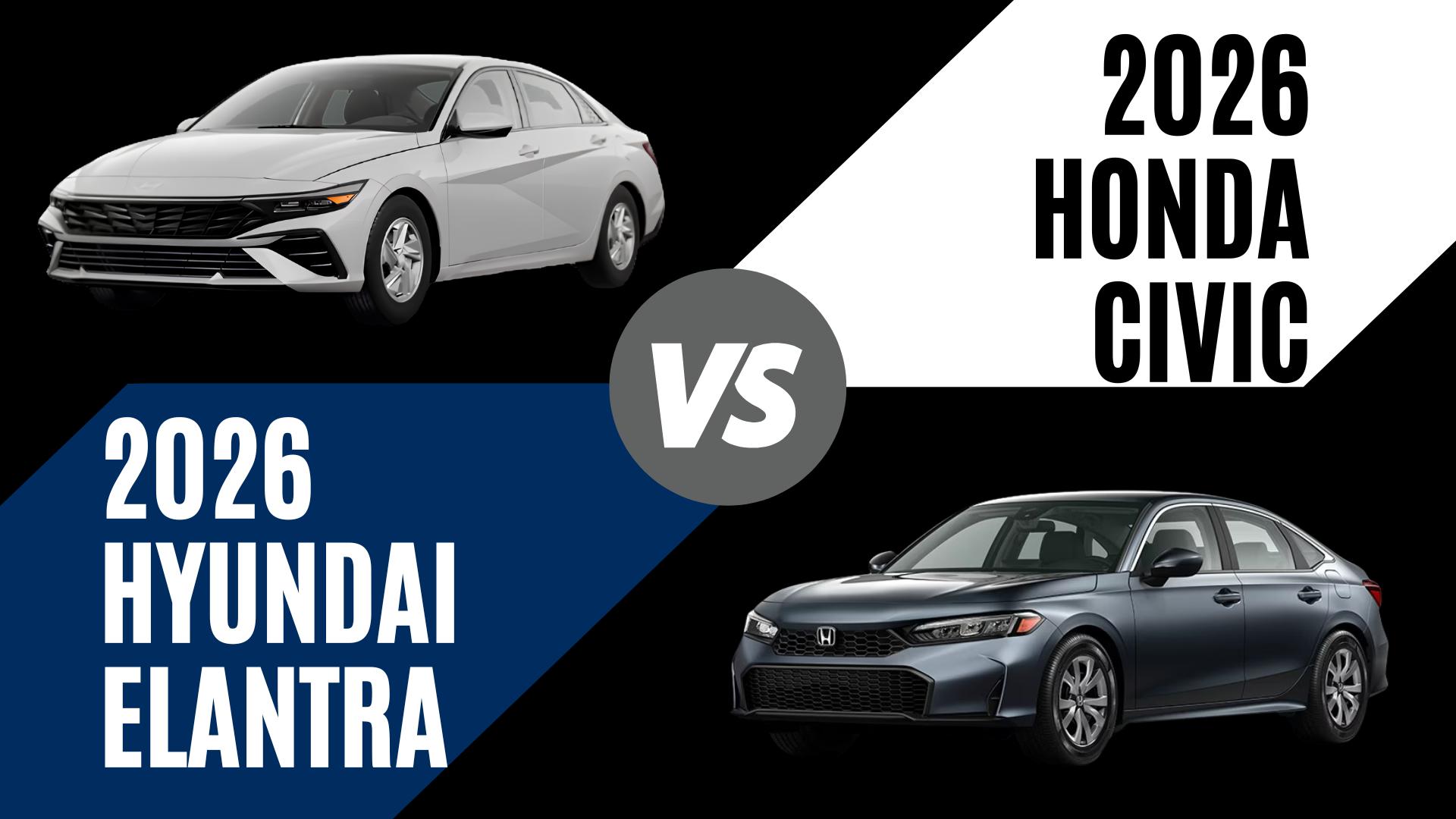
Comparing Two Compact Sedans Built for Everyday Driving
Compact sedans remain a smart choice for drivers focused on fuel efficiency, affordability, and daily practicality. The Hyundai Elantra and Honda Civic both continue standing out in this segment, although each sedan approaches comfort, technology, and long-term value a little differently.
Anyone comparing the 2026 Hyundai Elantra vs Honda Civic in Fayetteville, AR will notice these sedans prioritize efficient commuting and modern features without sacrificing everyday usability. This comparison focuses primarily on the gas-powered versions of both models, while also recognizing that each lineup offers hybrid options for drivers wanting additional fuel savings.
For shoppers researching compact sedans, the Elantra continues offering a strong combination of efficiency, technology, and ownership value.
Drivers exploring Hyundai sedans can also compare how the Elantra stacks up against other popular commuter-focused vehicles, like the Toyota Corolla.
Vehicle Comparison
2026 Hyundai Elantra
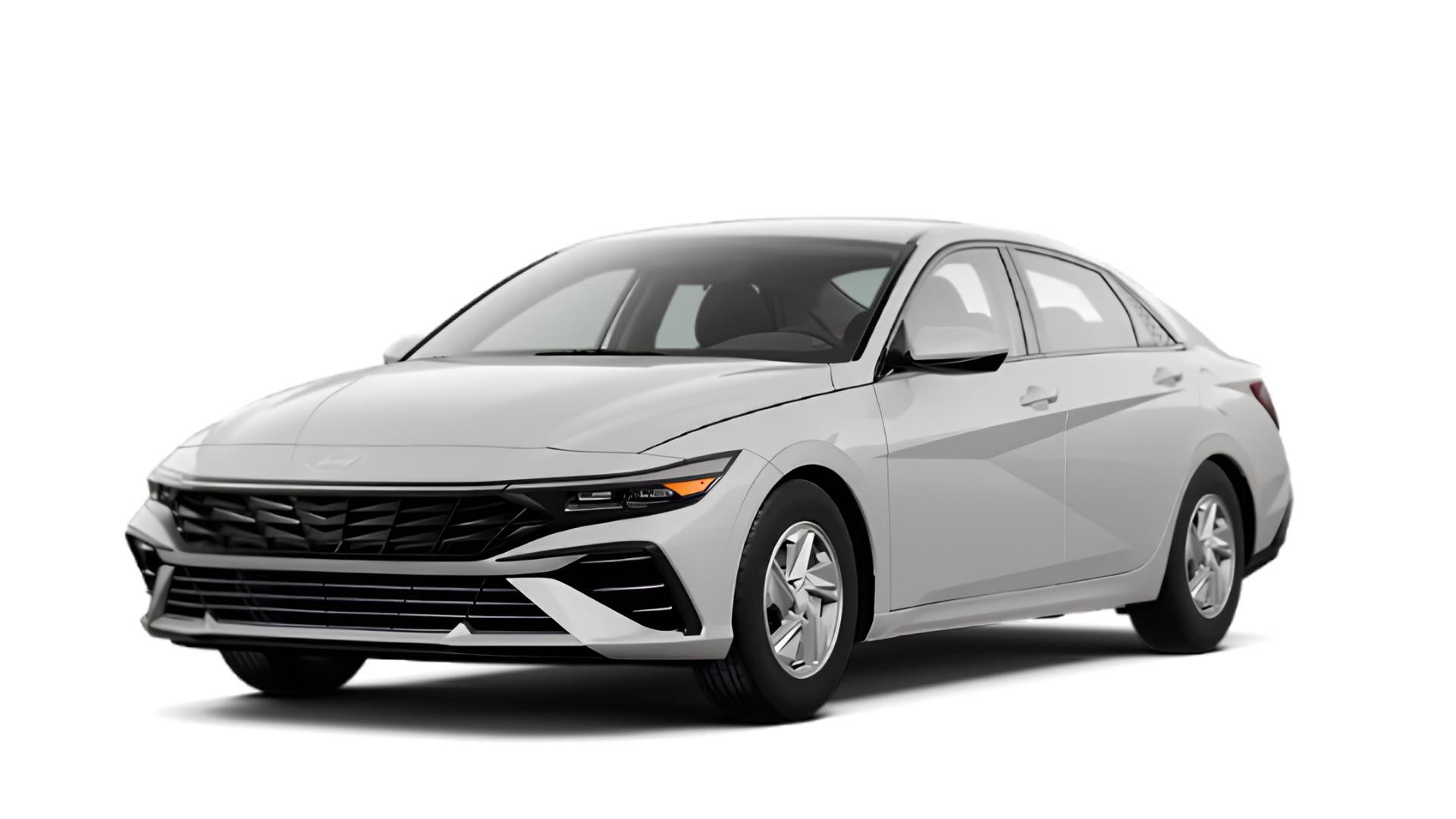
- Dual 10.3-inch Displays
- Hyundai SmartSense
- 10-Year Powertrain Warranty
2026 Honda Civic
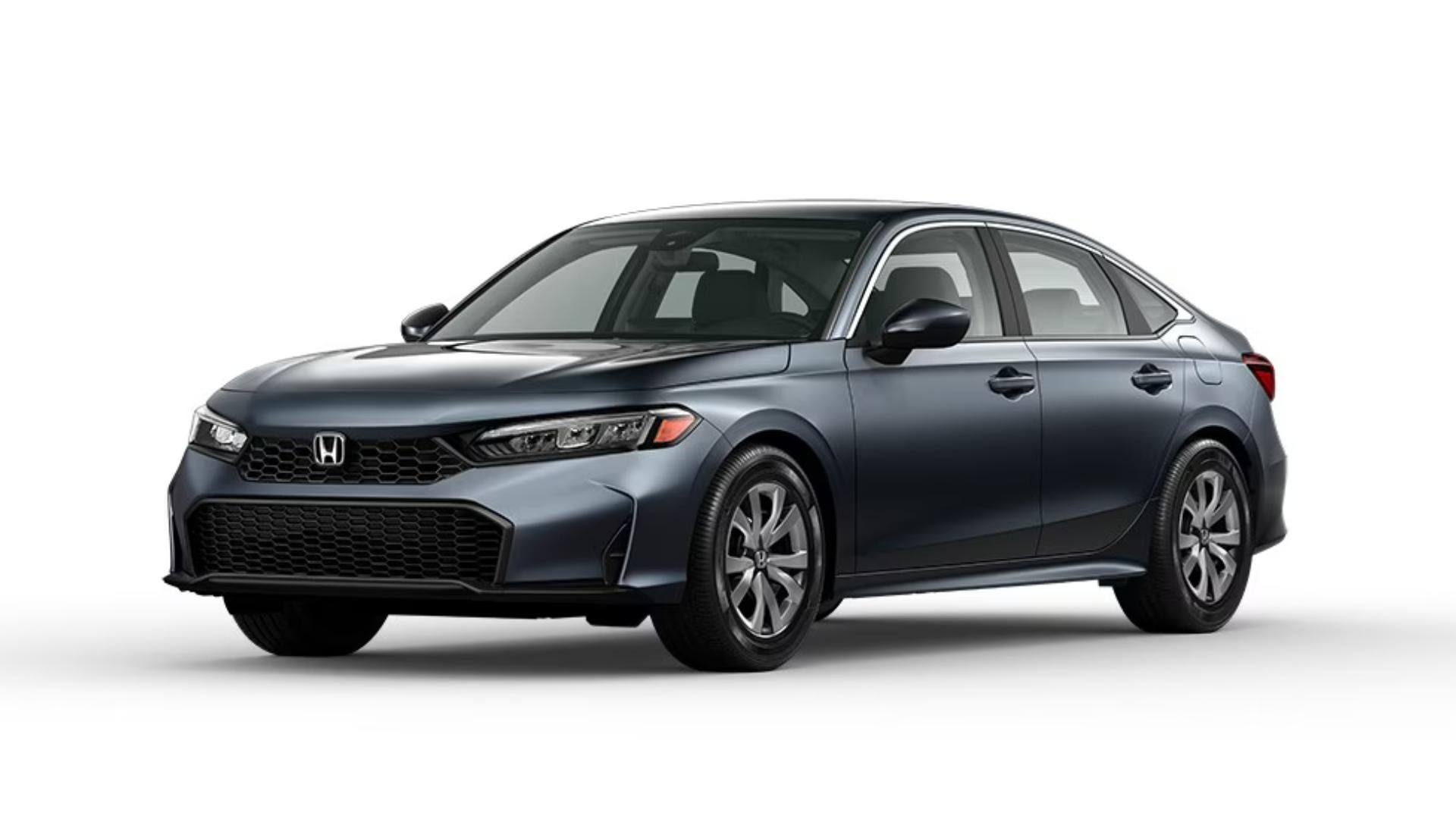
- Honda Sensing
- Available 9-inch Touchscreen
- Flexible Interior Space
Hyundai Gives the Elantra a More Distinctive Design
These sedans take noticeably different approaches to styling.
Sharp character lines, angular lighting elements, and a more aggressive overall profile help the Elantra stand out visually. Hyundai also gives the cabin a driver-oriented layout that feels modern without becoming overly complicated.
Honda keeps the Civic more understated with smoother body lines and a cleaner overall appearance. The design feels practical and familiar, appealing to drivers who prefer simplicity over bold styling.
Both sedans remain easy to maneuver and practical for commuting, although the Elantra creates a stronger visual impression.
Design highlights worth comparing:
- Elantra: bold styling with a driver-focused interior
- Civic: clean and straightforward design
- Both: compact sedans with seating for five
The Civic Feels Sportier While the Elantra Prioritizes Comfort
Driving personality becomes one of the clearest differences between these sedans.
The Elantra focuses more heavily on smooth commuting comfort and balanced road manners. While acceleration from the base engine remains modest, the overall driving experience feels composed and easygoing during both city driving and highway travel.
Honda gives the Civic more responsive steering and slightly sportier handling characteristics, helping it feel more engaging around curves and during quick lane changes.
For many drivers, however, the Elantra’s smoother ride quality may feel more relaxing during longer commutes and everyday driving.
Hyundai continues emphasizing convenience-focused driving technology across its sedan lineup.
Driving comparison highlights:
- Elantra: smooth ride quality and comfortable commuting manners
- Civic: nimble handling and responsive steering feel
- Both: practical compact sedans for daily driving
Interior Space Remains Strong for Both Sedans
Passenger comfort and cabin usability remain important strengths for both models.
The Elantra offers impressive passenger room for a compact sedan, especially in the rear seat. Cargo space also remains practical for groceries, luggage, and daily errands.
Honda gives the Civic a roomy cabin layout with flexible storage areas and straightforward controls that help keep the interior user-friendly.
The Elantra’s interior presentation feels slightly more modern overall, thanks to its dashboard design and available digital display layout.
Interior highlights worth comparing:
- Elantra: spacious cabin with modern dashboard layout
- Civic: practical interior with flexible storage space
- Both: comfortable seating for five passengers
Hyundai Delivers a More Advanced Technology Experience
Technology plays a major role in how modern compact sedans feel during everyday use.
Available dual 10.3-inch displays help give the Elantra a cleaner and more upscale interior presentation by combining infotainment and digital gauge displays into one modern layout.
The Civic comes standard with a 7-inch touchscreen, while higher trims upgrade to an available 9-inch display.
Hyundai also continues to expand connected technology and infotainment features across its lineup.
Technology comparison highlights:
- Elantra: available dual 10.3-inch displays
- Civic: available 9-inch touchscreen
- Both: smartphone connectivity and modern infotainment systems
Both Sedans Include Strong Safety Technology
Modern driver-assistance systems remain a priority in this segment.
Hyundai continues earning recognition for advanced safety systems across its lineup. The Elantra includes Hyundai SmartSense safety technology with features like lane-keeping assistance, driver attention warning, and available adaptive cruise control depending on trim level.
Honda equips every Civic with Honda Sensing driver-assistance technology, including adaptive cruise control and lane-keeping assistance as standard equipment.
Safety comparison highlights:
- Elantra: Hyundai SmartSense safety technology
- Civic: Honda Sensing driver-assistance features
- Both: advanced safety and driver-assistance systems
Fuel Economy Remains Competitive Between Both Sedans
Efficiency continues playing a major role for compact sedan buyers.
Gas-powered Elantra models achieve up to 31 MPG in the city and 40 MPG on the highway, helping make the sedan highly practical for commuting and highway travel. Hybrid Elantra models also remain available for drivers wanting additional efficiency.
The Civic reaches up to 36 MPG combined, depending on trim and configuration, giving Honda strong overall fuel economy ratings in this segment.
Both models offer hybrid variants in addition to the gas-powered versions compared here, giving shoppers additional flexibility depending on their driving habits.
Hyundai continues offering several fuel-efficient vehicles designed for daily commuting and long-distance driving.
Efficiency highlights worth comparing:
- Elantra: strong highway MPG and available hybrid option
- Civic: competitive combined fuel economy
- Both: efficient compact sedans for commuting
Hyundai Continues Offering Stronger Ownership Coverage
Long-term ownership costs can become just as important as fuel economy.
One area where the Elantra stands apart is Hyundai’s extended warranty coverage and complimentary maintenance program. Those benefits help reduce ownership costs and provide additional peace of mind during long-term ownership.
Honda offers solid reliability and standard warranty coverage, although it does not match Hyundai’s level of ownership support.
Hyundai warranty coverage continues to stand out among mainstream automotive brands as America’s Best Warranty.
Ownership value highlights:
- Elantra: longer warranty and complimentary maintenance
- Civic: strong reliability reputation
- Hyundai: stronger long-term ownership benefits
Which Compact Sedan Fits Fayetteville Drivers Better?
The Honda Civic remains a strong option for drivers who prioritize sporty handling and balanced road manners.
For many Fayetteville-area drivers, however, the Hyundai Elantra delivers a more complete overall package thanks to its modern technology, spacious interior, strong fuel economy, and long-term ownership benefits. Its available dual-screen setup, hybrid flexibility, and industry-leading warranty coverage help the Elantra stand out in the competitive compact sedan segment.
Ready to experience the Hyundai Elantra in person? Visit Crain Hyundai of Fayetteville to explore available trims and features today.
FAQs
Q: Does the Hyundai Elantra offer a hybrid option?
A: Yes. Hyundai offers an available Elantra Hybrid model for drivers wanting additional fuel efficiency.
Q: Which sedan offers the larger available display setup?
A: The Hyundai Elantra offers available dual 10.3-inch displays that combine infotainment and digital gauges into one modern layout.
Q: Which compact sedan offers stronger warranty coverage?
A: The Hyundai Elantra includes Hyundai’s 10-year/100,000-mile powertrain warranty along with complimentary maintenance coverage.

Choosing a Compact SUV for Life in Northwest Arkansas
Drivers in Fayetteville need a compact SUV that can keep up with everything from daily commutes to weekend plans across Northwest Arkansas. Fuel efficiency, comfort, and long-term value all play a role in finding the right fit.
Looking at the 2026 Hyundai Tucson vs Nissan Rogue in Fayetteville, AR, both models deliver practicality, modern features, and everyday usability. The differences start to stand out when you look at interior space, technology availability, and overall ownership value.
For drivers traveling between Fayetteville, Springdale, and Bentonville, those details can make a noticeable difference over time.
Vehicle Comparison
2026 Hyundai Tucson
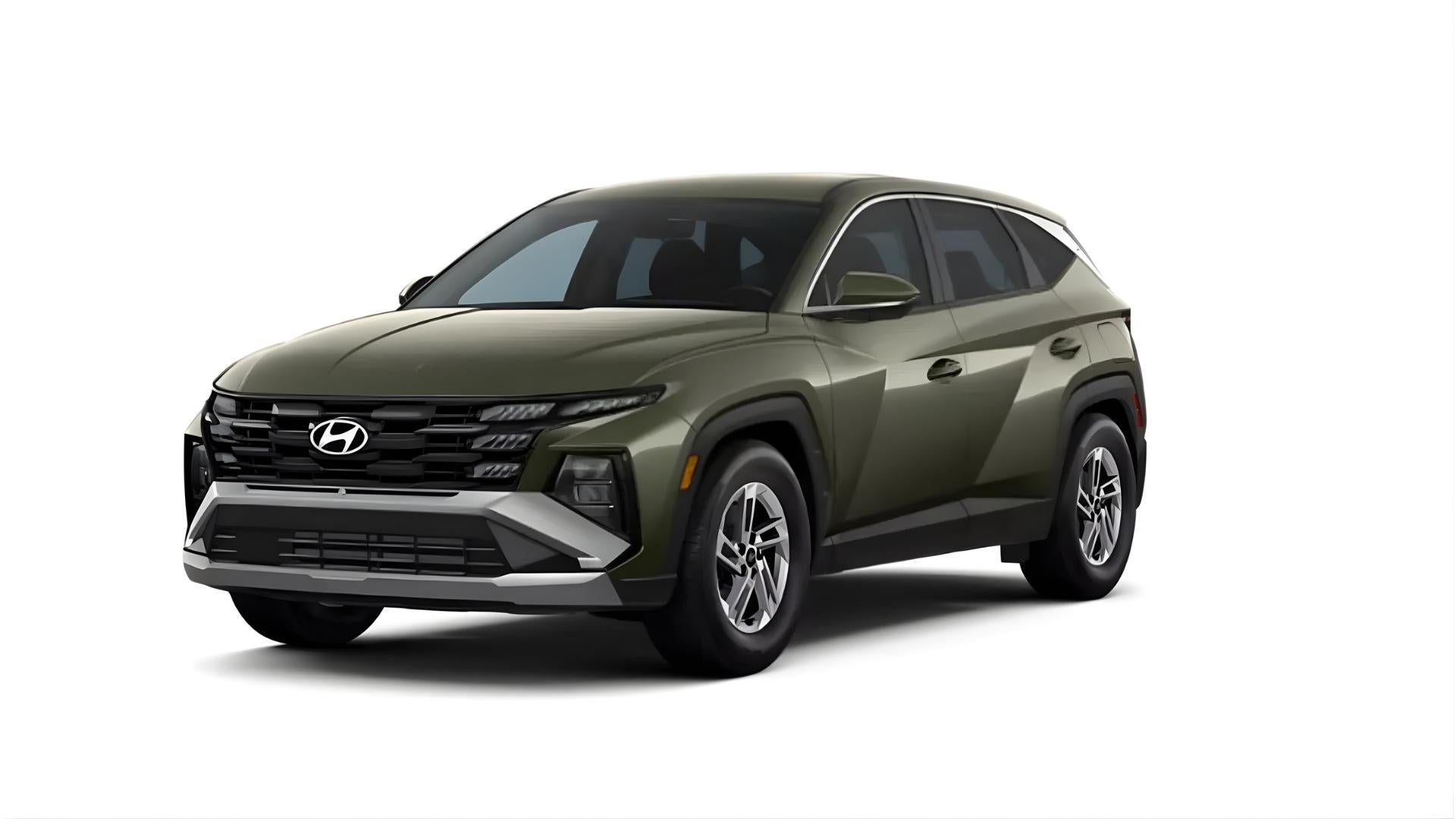
- 12.3-inch Digital Display Interface
- Complimentary Maintenance Coverage
- Hyundai SmartSense Safety Suite
2026 Nissan Rogue
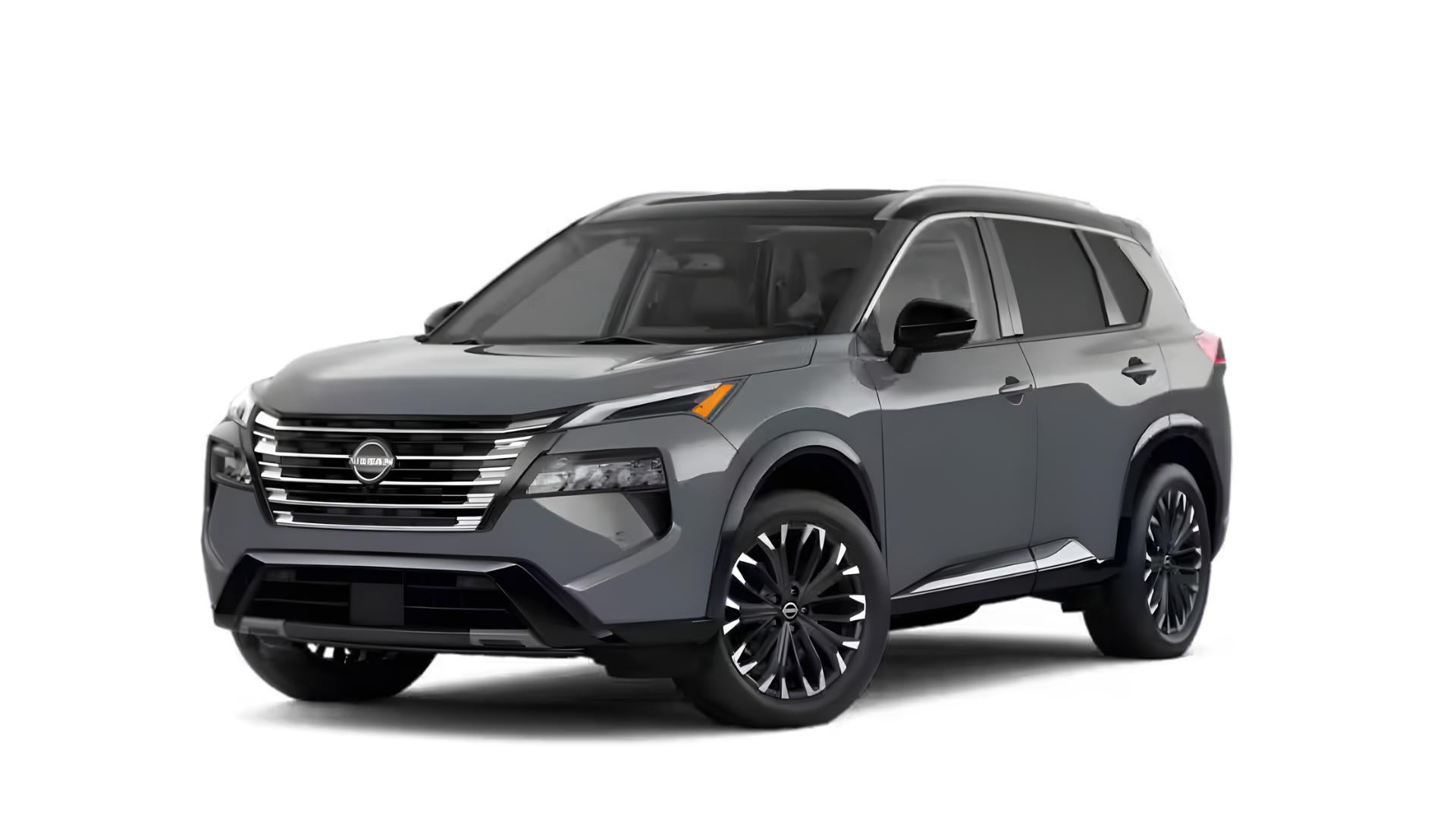
- Available 12.3-inch Touchscreen Display
- ProPILOT Assist
- Turbocharged Engine
A Fresh Take on Design and Style
Compact SUVs don’t have to blend in, and these two take different approaches.
A bold exterior and modern design language give the Tucson a more distinctive look on the road. Inside, the layout feels clean and refined, creating a more upscale impression.
The Rogue sticks with a more traditional design. It’s comfortable and familiar, with subtle styling that emphasizes practicality over standing out.
Design highlights at a glance:
- Tucson: modern styling with a refined interior feel
- Rogue: clean, practical, and familiar design
How They Handle Daily Driving
Getting around Fayetteville means dealing with everything from traffic to highway driving.
Ride quality in the Tucson leans toward comfort, with a smooth and composed feel that helps absorb rough roads. The cabin stays quiet, making longer drives more relaxing.
The Rogue also delivers a comfortable experience, with predictable handling that works well in everyday driving situations.
What stands out behind the wheel:
- Tucson: smooth, quiet, and more refined overall
- Rogue: comfortable and easy to drive
- Both: well-suited for daily commuting
Interior Space and Everyday Flexibility
Interior usability becomes more important the longer you own the vehicle.
More rear seat room gives the Tucson an advantage when carrying passengers, especially on longer drives. Cargo space is also easier to work with, adding flexibility for daily errands or trips.
The Rogue still offers a practical interior with smart storage solutions, making it a solid option for everyday use.
Interior differences to keep in mind:
- Tucson: more rear passenger space and cargo flexibility
- Rogue: practical layout with useful storage
- Both: seating for five passengers
Technology That Fits Your Routine
Technology should feel intuitive, not complicated.
A 12.3-inch digital display system gives the Tucson a more modern and user-friendly setup right out of the gate. Navigation, media, and settings are all easy to access in one place.
Hyundai continues to focus on convenience-driven technology that enhances everyday driving, with features designed to make connectivity and usability feel more natural.
The Rogue offers an available 12.3-inch touchscreen, but many trims come with smaller displays, making advanced tech more dependent on upgrades.
Technology comparison:
- Tucson: large display with strong standard availability
- Rogue: larger screen available on higher trims
- Both: modern infotainment features
Safety Features That Build Confidence
Safety remains a priority for both SUVs.
A wide range of driver-assistance features comes standard in the Tucson, helping drivers stay aware and supported in everyday situations.
Hyundai SmartSense includes systems like forward collision avoidance and lane-keeping assist, designed to improve overall driver confidence.
The Rogue offers similar core safety features, along with available ProPILOT Assist for hands-free highway driving on select trims.
Safety highlights:
- Tucson: strong standard safety feature availability
- Rogue: available hands-free driving assistance
- Both: advanced driver-assistance systems
Performance, AWD, and Fuel Efficiency
This comparison focuses on gas-powered models only.
The Tucson produces 187 horsepower and offers available all-wheel drive, delivering a balanced mix of efficiency and everyday performance. Fuel economy ranges from 26 to 28 MPG combined.
The Rogue generates 201 horsepower and also offers available all-wheel drive. Fuel economy reaches between 29 and 32 MPG combined, depending on configuration.
While the Rogue edges ahead slightly in maximum MPG, the Tucson focuses on consistent efficiency across its lineup.
Hyundai continues to prioritize fuel efficiency across its lineup, offering a range of models designed to balance performance and MPG.
Performance and efficiency comparison:
- Tucson: balanced performance with consistent MPG
- Rogue: slightly higher fuel economy potential
- Both: available AWD for added confidence
Ownership Value That Lasts
Long-term value often matters more than initial impressions.
Hyundai gives Tucson drivers a clear advantage with extended warranty coverage and complimentary maintenance, helping reduce ownership costs over time.
Hyundai’s warranty coverage continues to stand out across the industry, offering added peace of mind for drivers planning to keep their vehicle longer.
The Rogue includes standard warranty coverage but does not match the same level of long-term ownership benefits.
Value comparison:
- Tucson: strong warranty and included maintenance
- Rogue: standard coverage with fewer added benefits
Which SUV Makes More Sense in Fayetteville?
For drivers in Fayetteville and surrounding areas like Springdale and Farmington, the right SUV should feel comfortable every day while still delivering long-term value.
The Nissan Rogue offers strong fuel economy and useful features, making it a solid option for many drivers.
A more complete package makes the Hyundai Tucson stand out. With a refined interior, better standard technology, and stronger ownership benefits, it delivers a more well-rounded experience for drivers across Northwest Arkansas.
FAQs
Q: Which SUV offers better fuel economy?
A: The Nissan Rogue has slightly higher maximum MPG, but the Tucson delivers more consistent efficiency across trims.
Q: Does the Hyundai Tucson come with strong standard technology?
A: Yes, the Tucson includes a large 12.3-inch display and modern features as standard equipment.
Q: Which SUV is better for long-term ownership?
A: The Tucson stands out with longer warranty coverage and complimentary maintenance.

Research can only take you so far. At some point, the only way to know if a vehicle fits your life is to get behind the wheel. If you’re planning to schedule a Hyundai test drive in Fayetteville, AR, the process is straightforward and designed to work around your schedule.
You might already have a few models in mind. Maybe you’ve been looking at SUVs for extra space, comparing hybrid options, or trying to narrow things down to one or two sedans. A test drive is where those decisions start to feel a lot clearer.
Driving around Fayetteville gives you a real mix of conditions. Between traffic near campus, stretches along College Avenue, and quick trips toward Farmington or Springdale, your vehicle needs to handle more than just a smooth highway.
How to Schedule Your Hyundai Test Drive in Fayetteville, AR
Setting up a test drive doesn’t take long. The layout is simple, and each step walks you through the process without overcomplicating anything.
Step 1: Select a Vehicle That Fits Your Needs
The first step is choosing the type of Hyundai you want to drive. Vehicles are organized into categories so you can quickly find what you’re interested in:
- Hybrid and EV options like the IONIQ 5 or Tucson Hybrid
- SUVs ranging from the Kona to the Palisade
- Sedans, including the Sonata or Elantra
At this stage, you’re focusing on the model itself. Details like trim level, color, and features can be confirmed later, and you may hear from a team member to help finalize those preferences.
It’s also worth noting that you’re not limited to new vehicles. Many drivers in Fayetteville test drive used or certified pre-owned options as part of their search, especially when comparing value across different price points. If you’re looking for that balance between affordability and added peace of mind, it helps to understand how Hyundai’s certified program works.
Efficiency is another factor that often comes up. Hyundai’s hybrid and EV lineup continues to grow, especially for drivers looking to balance performance with fewer stops at the pump. Learn more about our award-winning hybrids and EVs.
Step 2: Choose a Time That Works for You
Once you’ve picked a vehicle, the next step is selecting a time. Available appointments are typically grouped by morning, afternoon, and evening.
That flexibility makes it easier to fit a test drive into your day, whether you’re stopping by after work or planning around a weekend schedule.
If something changes, you’re not stuck. Appointments can be adjusted or rescheduled through your confirmation, so you can move things around if needed.
Step 3: Enter Your Information and Confirm
The last step is quick. Enter your contact details and submit your request.
You’ll need a valid driver’s license for the test drive. This is standard and just makes sure everything is ready when your appointment begins.
After that, you’re set.
Test Drive Options That Fit Your Schedule
Not every test drive looks the same.
Visiting the Hyundai dealership in Fayetteville is the most direct option. Your vehicle can be ready when you arrive, and it gives you the chance to look at multiple models in one visit.
Depending on availability, a vehicle may also be brought to you. That can vary based on distance and scheduling, but the system is designed to connect you with the closest available team.
Even if you’re outside Fayetteville, it’s still worth checking your options.
Why Test Driving a Hyundai Matters Before You Buy
Research helps you narrow things down, but it only goes so far. A test drive is where everything starts to feel real.
This is especially true when looking at used vehicles, where differences in condition and features can vary more from one option to another.
Experience Comfort and Space
You can read specs all day, but sitting in the driver’s seat tells you a lot more. You’ll notice how everything feels, from seat comfort to visibility and layout.
SUVs highlight those differences even more. With a larger model like the Hyundai Palisade, comfort, space, and features play a bigger role in your day-to-day drive. If you’re considering something in that size range, taking a closer look at how it compares to other full-size SUVs can help you know what to pay attention to when selecting a model.
Get a Feel for Performance
Every vehicle responds differently once you’re on the road. Acceleration, steering, and braking all become more noticeable during a test drive.
Fayetteville roads give you a good mix of conditions, from stop-and-go traffic near campus to more open stretches outside the city.
Drivers who want added capability, especially for hauling or outdoor use, may also want to explore options like the Santa Cruz ahead of time, especially if you’re comparing it to other trucks in its class.
Try Out Technology Features
Modern Hyundai vehicles include a range of technology features, but it’s easier to understand them when you can try them yourself.
During a test drive, you can connect your phone, explore the touchscreen, and get familiar with driver-assist systems. Features like digital key access are much easier to appreciate once you see how they work in real time, especially when you understand how they’re designed to make everyday driving more convenient.
Compare Models Back-to-Back
Driving more than one vehicle in the same visit can make your decision easier.
Differences that seem small online often stand out quickly when you experience them back-to-back. This is especially helpful if you’re still deciding between body styles or sizes.
Still deciding? A few comparisons can help you walk in with a clearer idea of what you want:
- Want a compact SUV that’s easy to drive but still versatile? See how the Kona compares to similar options.
- Need something with more room for family or road trips? Take a closer look at how the Santa Fe stacks up against other SUVs.
- Thinking about a sedan for commuting? Compare how the Elantra fits into the compact sedan class.
Driving Around Fayetteville
A local test drive gives you a better sense of what daily driving will actually feel like.
Pay attention to how it handles stop-and-go traffic, how smooth the ride feels on longer stretches, and how easy it is to navigate turns and tighter areas. These small details are what make a difference once you’re driving it every day.
Make the Most of Your Test Drive
A little preparation can make your test drive more useful.
Before you come in:
- Think about your top priorities
- Bring your driver’s license
- Plan to compare more than one vehicle if possible
Knowing what you’re looking for ahead of time can make the experience more productive, especially if you’re still getting familiar with the car-buying process.
Ready to Get Started?
It only takes a few minutes to schedule a Hyundai test drive in Fayetteville, AR, and see how a vehicle actually feels before making a decision.
Crain Hyundai of Fayetteville gives you the opportunity to explore your options, compare models, and find something that fits your everyday driving needs.
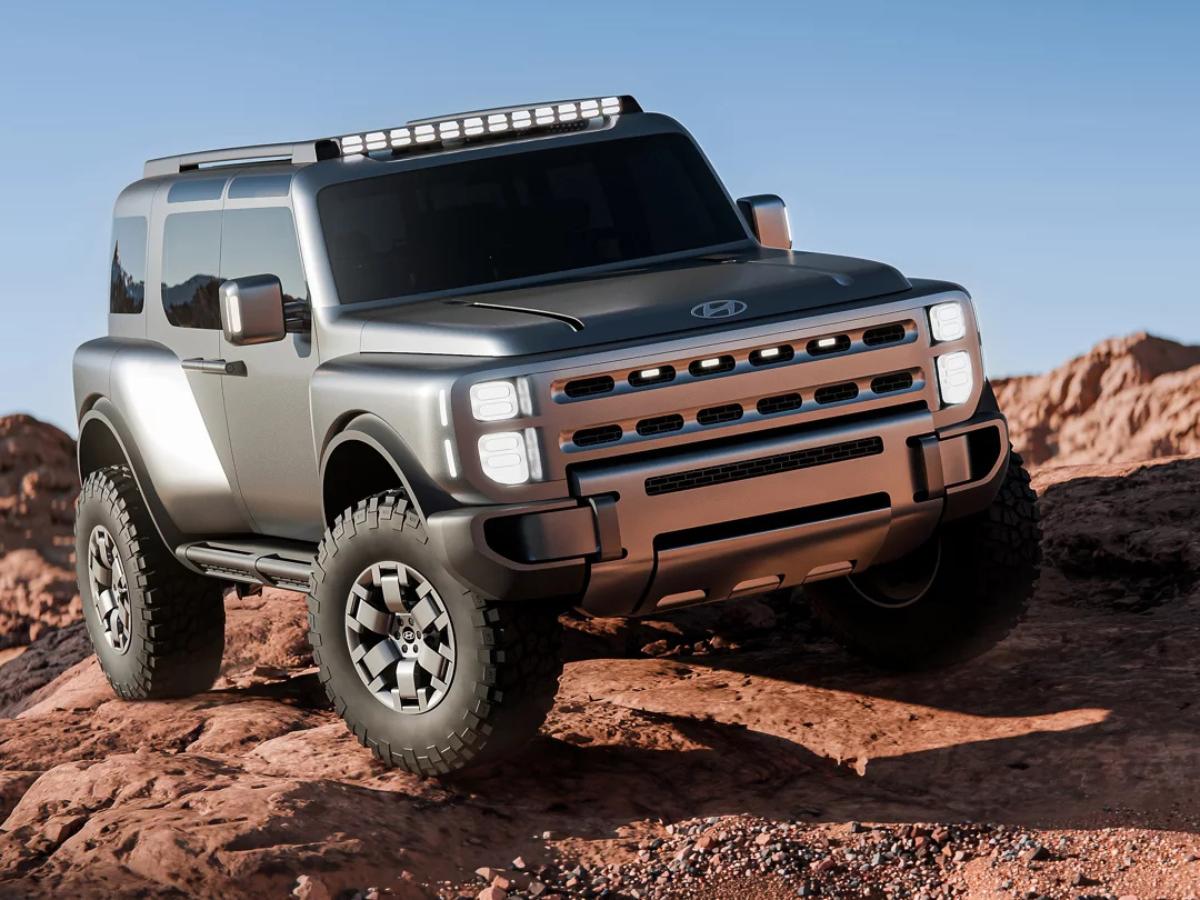
The Hyundai Boulder concept SUV made a bold and unexpected appearance at the 2026 New York International Auto Show, and it’s already turning heads across the country. More than just a concept, this rugged SUV is a preview of Hyundai’s future direction as the brand prepares to enter the body-on-frame truck segment. For drivers in Fayetteville and throughout Northwest Arkansas, it signals something exciting: Hyundai is getting serious about off-road capability, durability, and real-world utility.
At Crain Hyundai of Fayetteville, we’re keeping a close eye on what this concept means for future vehicles you’ll eventually see on roads around Fayetteville, AR, and beyond.
A First Look at the Hyundai Boulder Concept SUV
The Hyundai Boulder concept SUV is designed as a preview of Hyundai’s first U.S. body-on-frame platform, which will eventually underpin a midsize pickup truck expected by 2030. This type of construction, long favored in trucks and serious SUVs, is known for its strength, durability, and ability to handle demanding tasks like towing, hauling, and off-road driving.
As the Hyundai Boulder concept SUV previews a future midsize pickup, models like the Hyundai Santa Cruz already show how Hyundai delivers truck-inspired capability and everyday versatility today.
Built for American Roads & Trails
One of the most notable aspects of the Boulder Concept is Hyundai’s commitment to the U.S. market. Future body-on-frame vehicles inspired by this concept are planned to be:
- Designed in America
- Developed for American drivers
- Built in America
- Constructed using Hyundai-produced U.S. steel
This approach reflects what many drivers in Fayetteville, Springdale, and Prairie Grove already expect: vehicles that can handle daily driving while still ready for weekend adventures.
“Art of Steel” Design with Purpose
Hyundai calls the Boulder Concept’s design philosophy “Art of Steel,” and it goes beyond styling. It’s about using the strength and flexibility of steel to create a vehicle that is both functional and visually striking.
The SUV features:
- A bold, upright two-box silhouette for a commanding presence
- A durable, ladder-frame-style foundation
- A Liquid Titanium finish that highlights sculpted lines
- Coach-style doors for improved access and usability
Every detail is designed to balance rugged capability with modern design, something that stands out whether you’re driving through Fayetteville or heading toward trails near Devil’s Den State Park.
Designed for Serious Off-Road Capability
The Hyundai Boulder concept SUV was clearly built with adventure in mind. Its design emphasizes off-road performance and versatility for drivers who want to go beyond the pavement.
Key features include:
- 37-inch mud-terrain tires for maximum traction
- Generous ground clearance for uneven terrain
- Strong approach, departure, and breakover angles
- A full-size spare tire mounted on the tailgate
- Enhanced fording capability for water crossings
There’s even a real-time off-road guidance system designed to act like a digital spotter, helping drivers navigate challenging terrain with confidence.
With the Hyundai Boulder concept SUV built for off-road exploration, Fayetteville drivers can imagine taking a future Hyundai SUV to destinations similar to the region’s most scenic outdoor spots.
Smart Utility Features for Everyday Use
Beyond off-road strength, the Boulder Concept emphasizes practical utility. This matters just as much during the workweek as on weekend trips.
Notable exterior features include:
- A double-hinged tailgate that opens from either side
- A power drop-down rear window for longer cargo
- A low-profile roof rack with steel webbing for added storage
- Reflective accents on tow hooks and handles for visibility
Since the Hyundai Boulder concept SUV emphasizes towing and hauling strength, it builds on capabilities you can already find in SUVs like the Hyundai Palisade when properly equipped.
The concept is also designed as a customizable platform, allowing drivers to add accessories that match their lifestyle, whether that’s for work, travel, or outdoor recreation.
Interior Built for Adventure and Function
Inside, the Boulder Concept continues its rugged and functional theme. The interior is designed to handle wear and tear while still offering comfort and flexibility.
Highlights include:
- Durable materials in high-use areas, like grab bars
- Physical knobs and buttons for easy use on rough terrain
- A configurable layout to support different needs
- Fold-out tray tables for work or meals on the go
While the Hyundai Boulder concept SUV focuses on rugged interior usability, it also aligns with the intuitive technology and driver-focused features found across Hyundai vehicles today.
What This Means for Hyundai’s Future Lineup
While the Boulder concept itself won’t go into production, it plays an important role in shaping what’s coming next. Hyundai has confirmed plans to introduce a midsize pickup truck by 2030, built on this new body-on-frame platform.
Even more notably, this truck is part of a larger expansion, with 36 new Hyundai vehicles planned for North America by 2030.
The Hyundai Boulder concept SUV joins other forward-looking designs that highlight where Hyundai is headed in terms of capability and innovation, like the Hyundai CRATER.
Why It Matters in Fayetteville and Northwest Arkansas
Life in Fayetteville, AR, often calls for a vehicle that can do more than just commute. Between the Ozark Mountains, nearby trails, and changing road conditions, versatility matters.
The Hyundai Boulder concept SUV reflects a shift toward vehicles that can handle:
- Weekend outdoor adventures
- Job site demands
- Long highway drives across Arkansas
- Everyday errands around town
It’s a direction that aligns naturally with how many drivers in Northwest Arkansas already live and drive.
Stay Updated with Crain Hyundai of Fayetteville
While the Boulder Concept is still a preview, it offers an exciting look at what Hyundai is working toward. If you’re interested in future Hyundai trucks or rugged SUVs, now is a great time to stay informed.
At Crain Hyundai of Fayetteville, our team is here to help you explore the latest Hyundai models and keep you updated as new innovations arrive. Whether you’re planning your next upgrade or just staying informed, we’re here to help.
Frequently Asked Questions
What is the Hyundai Boulder concept SUV?
The Hyundai Boulder concept SUV is a design study that previews Hyundai’s future body-on-frame platform, which will support a midsize pickup truck expected by 2030.
Will the Hyundai Boulder Concept be available for sale?
No, the Boulder Concept is not planned for production, but it strongly influences future Hyundai vehicles.
What makes body-on-frame construction important?
Body-on-frame construction provides durability and strength, making it ideal for towing, hauling, and off-road performance.
When will Hyundai release a midsize truck?
Hyundai plans to introduce a midsize pickup truck by 2030.
Where can I learn more about Hyundai vehicles?
You can stay updated by visiting Crain Hyundai of Fayetteville for the latest news and model information.
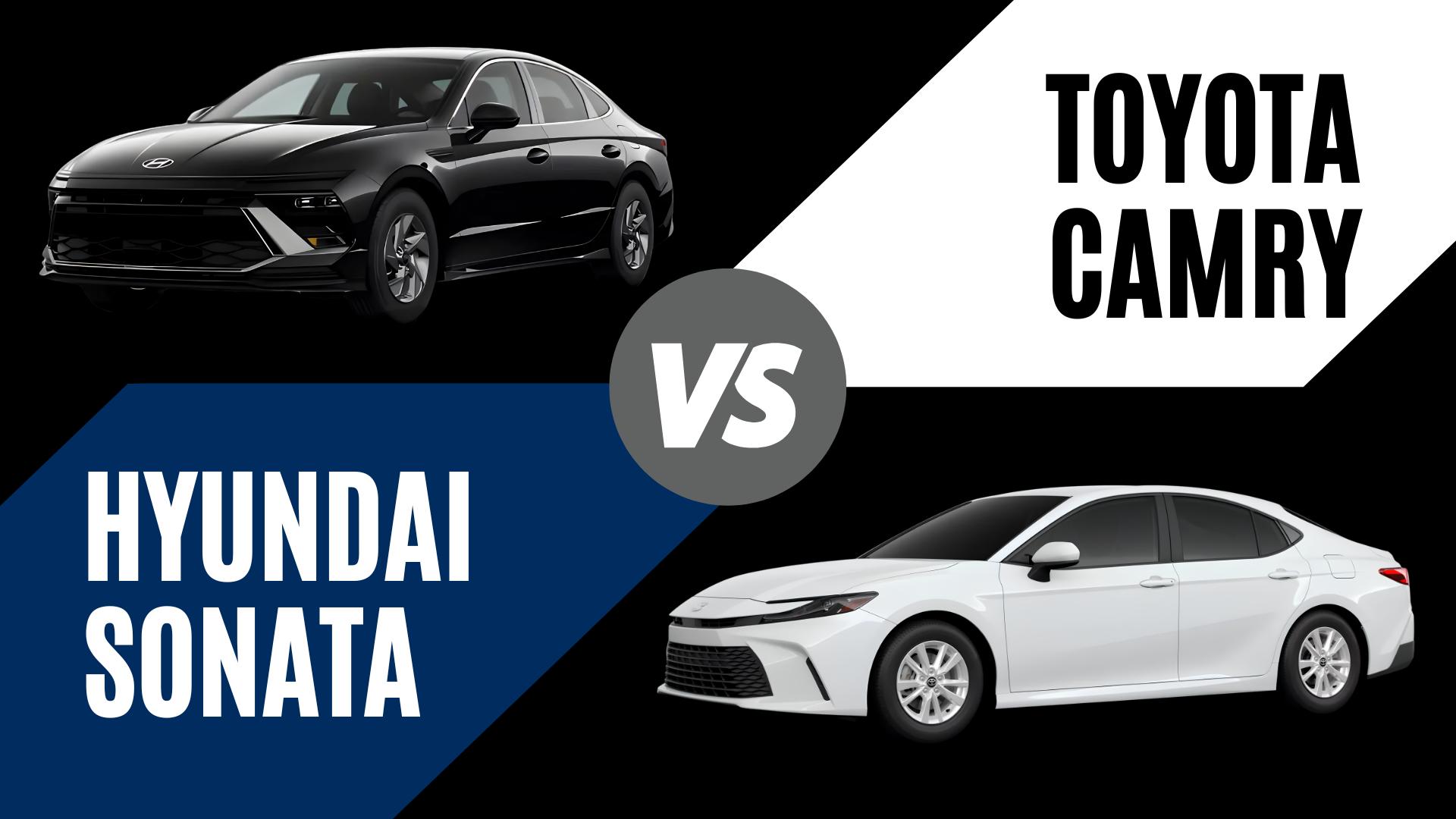
How the Hyundai Sonata and Toyota Camry Compare for Efficiency and Value
Sedan shoppers today often balance fuel efficiency with overall cost, and that’s exactly where the 2026 Hyundai Sonata vs. Toyota Camry comparison in Fayetteville, AR becomes interesting. Both models deliver strong efficiency and everyday comfort, but they take very different approaches under the hood.
One key difference stands out right away. While the Camry is now offered exclusively as a hybrid, the Sonata still gives drivers the choice between traditional gas power and a hybrid setup. That flexibility plays a major role when comparing affordability, ownership costs, and long-term value.
To get a deeper look at trims, features, and configurations, check out the Hyundai Sonata model research page.
Vehicle Comparison
2026 Hyundai Sonata
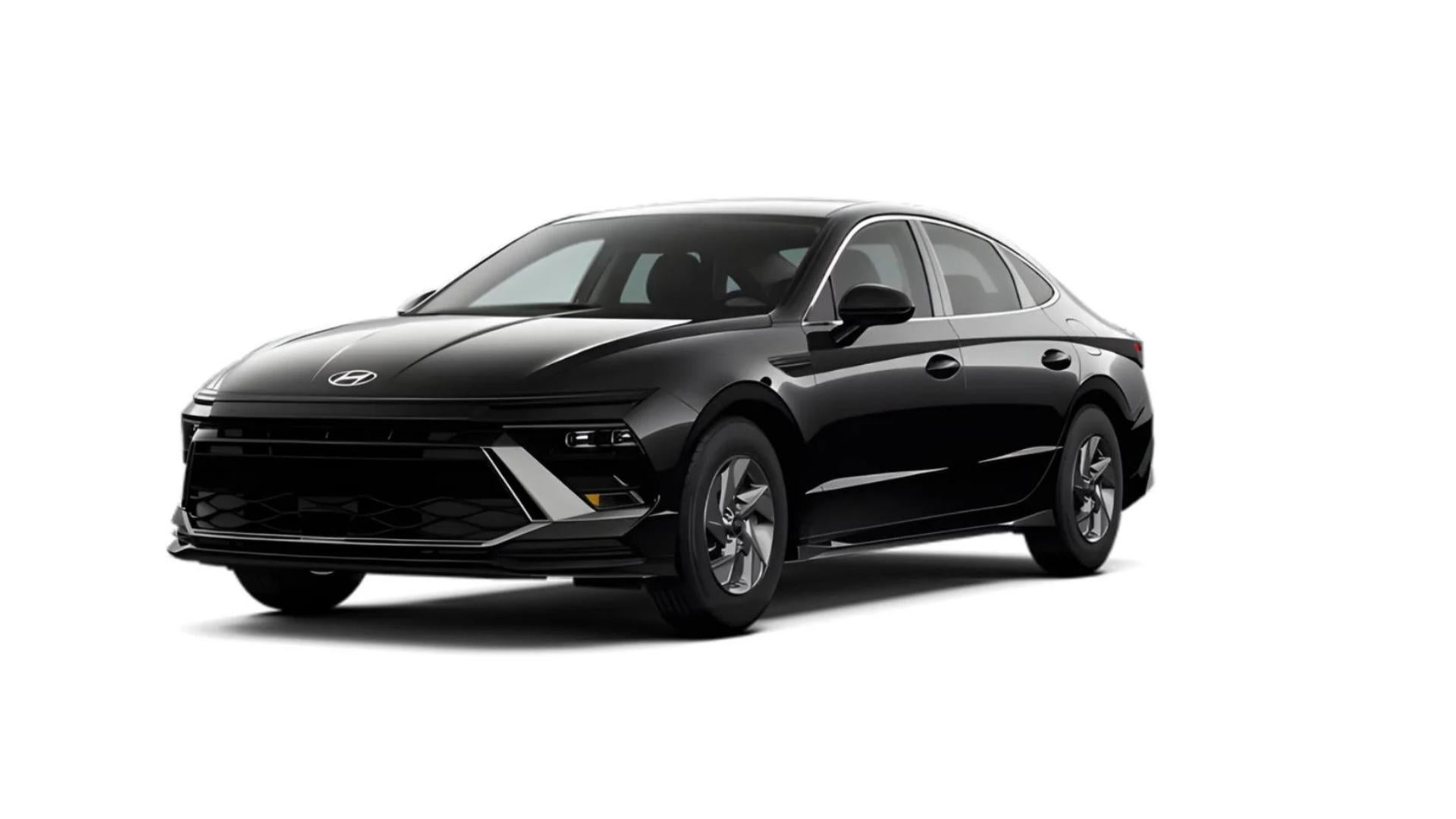
- 10-Year Powertrain Warranty
- Complimentary Maintenance
- 12.3-inch Display
2026 Toyota Camry
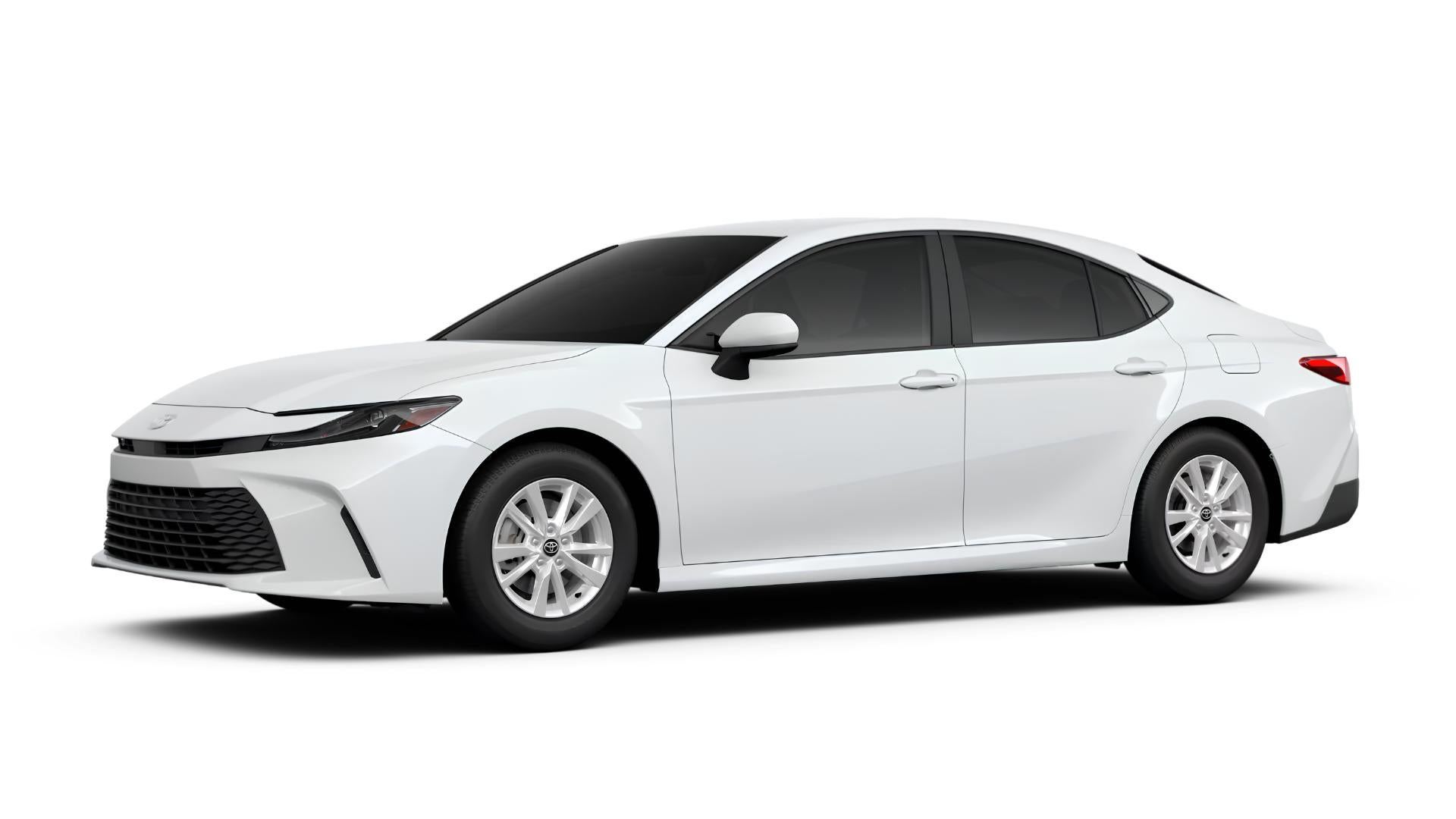
- Hybrid Powertrain System
- Toyota Safety Sense
- 12.3-inch Touchscreen
Exterior Design and First Impressions
Styling direction separates these two sedans more than you might expect.
A sharper, more modern look gives the Sonata a stronger visual presence, with sleek lines and a design that feels more contemporary. Inside, the layout leans toward a tech-forward feel without losing usability.
The Camry takes a more familiar approach, with a clean and recognizable design that prioritizes broad appeal rather than bold styling changes.
Design highlights:
- Sonata: modern, bold styling with a tech-forward interior
- Camry: classic, understated design
Ride Quality and Performance
How these sedans feel on the road is another key difference.
A smooth and composed ride defines the Sonata, making it comfortable for commuting and longer drives. The standard gas engine delivers adequate power for daily use, and Hyundai sticks with a traditional automatic transmission rather than a CVT, which helps maintain a more natural driving feel.
The Camry’s hybrid system delivers quick, low-speed responsiveness thanks to its electric motor. Acceleration feels stronger overall, though the CVT offers a different driving experience than a conventional automatic.
Performance takeaways:
- Sonata: smooth ride with a traditional automatic transmission
- Camry: responsive hybrid power with CVT behavior
Interior Space and Everyday Comfort
Cabin comfort is a strong point for both sedans, but there are subtle differences.
Front-seat space in the Sonata is particularly generous, offering more room than many competitors in the segment. Materials and overall fit feel slightly more upscale than expected at this price point.
The Camry also delivers a spacious and comfortable interior, with thoughtful features like dual-zone climate control and available upgrades on higher trims.
Interior highlights:
- Both offer seating for 5
- Sonata: more front-seat space and upscale feel
- Camry: comfortable cabin with practical features
Technology and Connectivity
Technology plays a major role in everyday usability.
A large 12.3-inch touchscreen gives the Sonata a clean and modern interface, paired with wireless Apple CarPlay and Android Auto for easy connectivity.
Toyota equips the Camry with an 8.0-inch standard display and a 12.3-inch touchscreen available on higher trims. The system is responsive and user-friendly, though the base setup is smaller.
Tech comparison:
- Sonata: larger standard screen with modern interface
- Camry: smaller standard screen with available upgrade
Safety and Driver Assistance
Both sedans include a strong set of standard safety features.
Hyundai equips the Sonata with a comprehensive suite of driver-assistance technologies, including adaptive cruise control, lane-keeping assist, and blind-spot monitoring.
Toyota includes its Safety Sense system on the Camry, bundling features like adaptive cruise control and lane-keeping assist into a standard package.
Safety highlights:
- Both offer advanced driver-assistance systems
- Sonata: well-rounded standard safety features
- Camry: Toyota Safety Sense suite included
Fuel Efficiency and Powertrain Differences
Efficiency is one of the biggest talking points in this comparison.
Gas-powered Sonata models deliver up to 28 miles per gallon in the city and 38 on the highway, offering strong efficiency without requiring a hybrid system. Drivers can also explore Hyundai vehicles known for strong fuel efficiency to see how Hyundai continues to prioritize MPG across its lineup.
The Camry, now hybrid-only, reaches up to 44 to 51 MPG combined, giving it an advantage in overall fuel economy. For drivers considering this setup, exploring the benefits of choosing a hybrid vehicle can help highlight what makes hybrid systems appealing.
What sets the Sonata apart is flexibility. Drivers can choose a traditional gas engine or opt for a hybrid version within the lineup, while the Camry requires committing to a hybrid powertrain.
Efficiency comparison:
- Sonata: strong MPG with gas or hybrid options available
- Camry: higher overall MPG with hybrid-only design
Ownership Value and Long-Term Costs
Long-term ownership is where differences become more noticeable.
Hyundai offers a major advantage with extended warranty coverage and included maintenance, helping reduce the overall cost of ownership. Learn more about Hyundai’s industry-leading warranty coverage and how it supports long-term ownership.
Toyota provides solid reliability and includes two years of complimentary maintenance, but its overall warranty coverage is shorter by comparison.
Value comparison:
- Sonata: longer warranty and more maintenance coverage
- Camry: shorter warranty with limited maintenance
Why the Hyundai Sonata is a Smart Choice in Fayetteville
Looking at both sedans side by side highlights a clear difference in approach.
The Camry stands out for its hybrid efficiency and strong fuel economy ratings, making it appealing to drivers focused primarily on fuel savings.
Flexibility and long-term value give the Sonata a broader appeal. A traditional gas option keeps upfront costs lower, while available hybrid models still provide an efficiency upgrade for those who want it. Add in stronger warranty coverage and included maintenance, and the Sonata becomes the more well-rounded choice for everyday driving.
FAQs
Is the 2026 Toyota Camry only available as a hybrid?
Yes, the 2026 Camry is offered exclusively with hybrid powertrains, combining a gas engine with electric motors for improved efficiency.
Does the Hyundai Sonata offer both gas and hybrid options?
Yes, the Sonata lineup includes both traditional gas engines and hybrid models, giving drivers more flexibility depending on their needs.
Which sedan is more affordable long-term?
The Hyundai Sonata offers better long-term value thanks to its extended warranty coverage and complimentary maintenance, which can help reduce ownership costs over time.
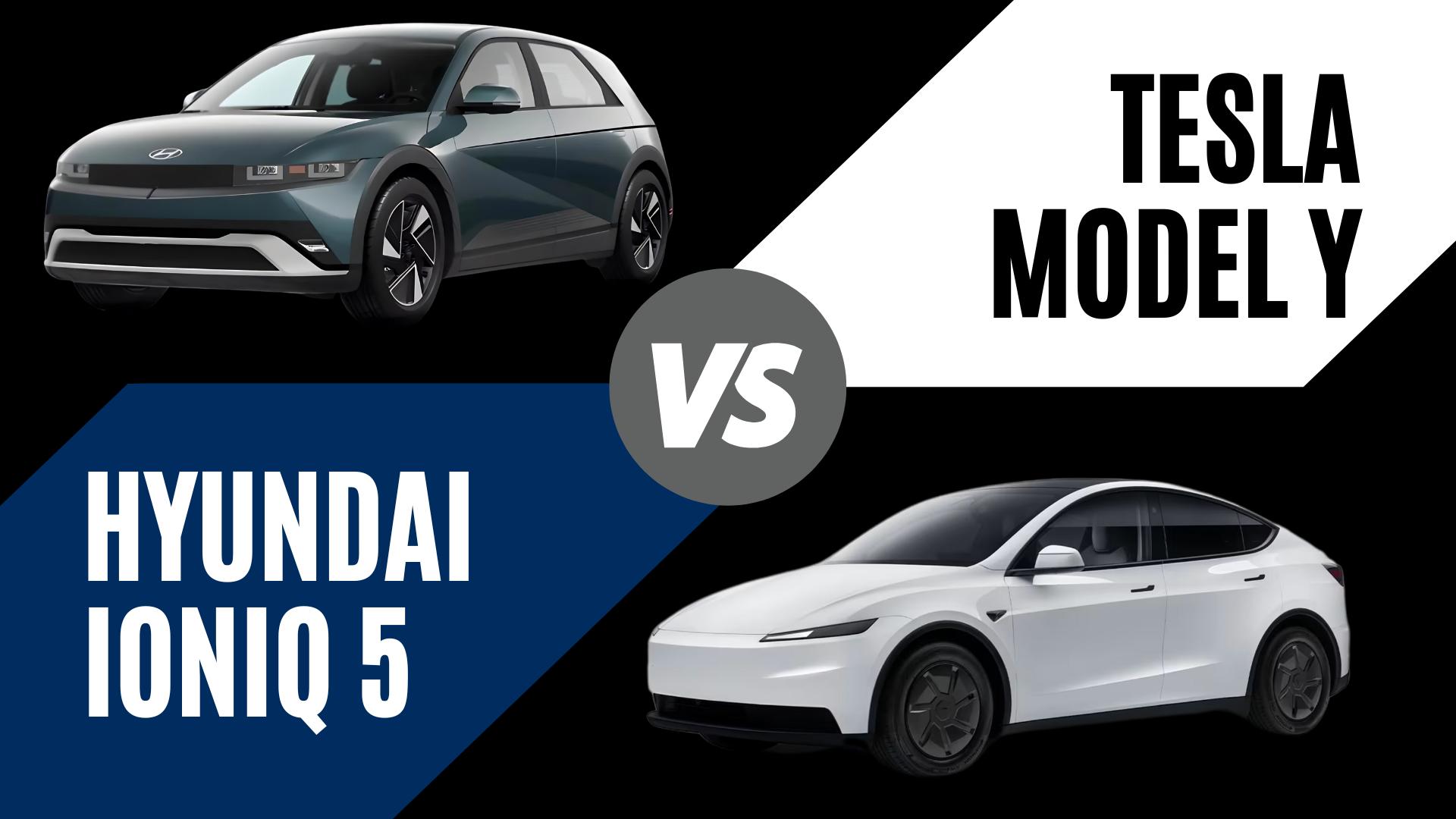
How the Hyundai Ioniq 5 and Tesla Model Y Compare in Real-World Driving
Electric vehicles continue to gain traction across Northwest Arkansas, and two models that consistently stand out are the Hyundai Ioniq 5 and Tesla Model Y. Both bring modern design, advanced technology, and practical performance to the table, but they approach everyday usability in very different ways.
Range, charging convenience, and long-term value tend to matter just as much as styling or acceleration. Looking closer at how these two EVs handle those priorities helps highlight which one fits more naturally into daily life around Fayetteville.
To get a deeper look at trims, features, and configurations, check out the Hyundai Ioniq 5 model research page.
Vehicle Comparison
2026 Hyundai Ioniq 5
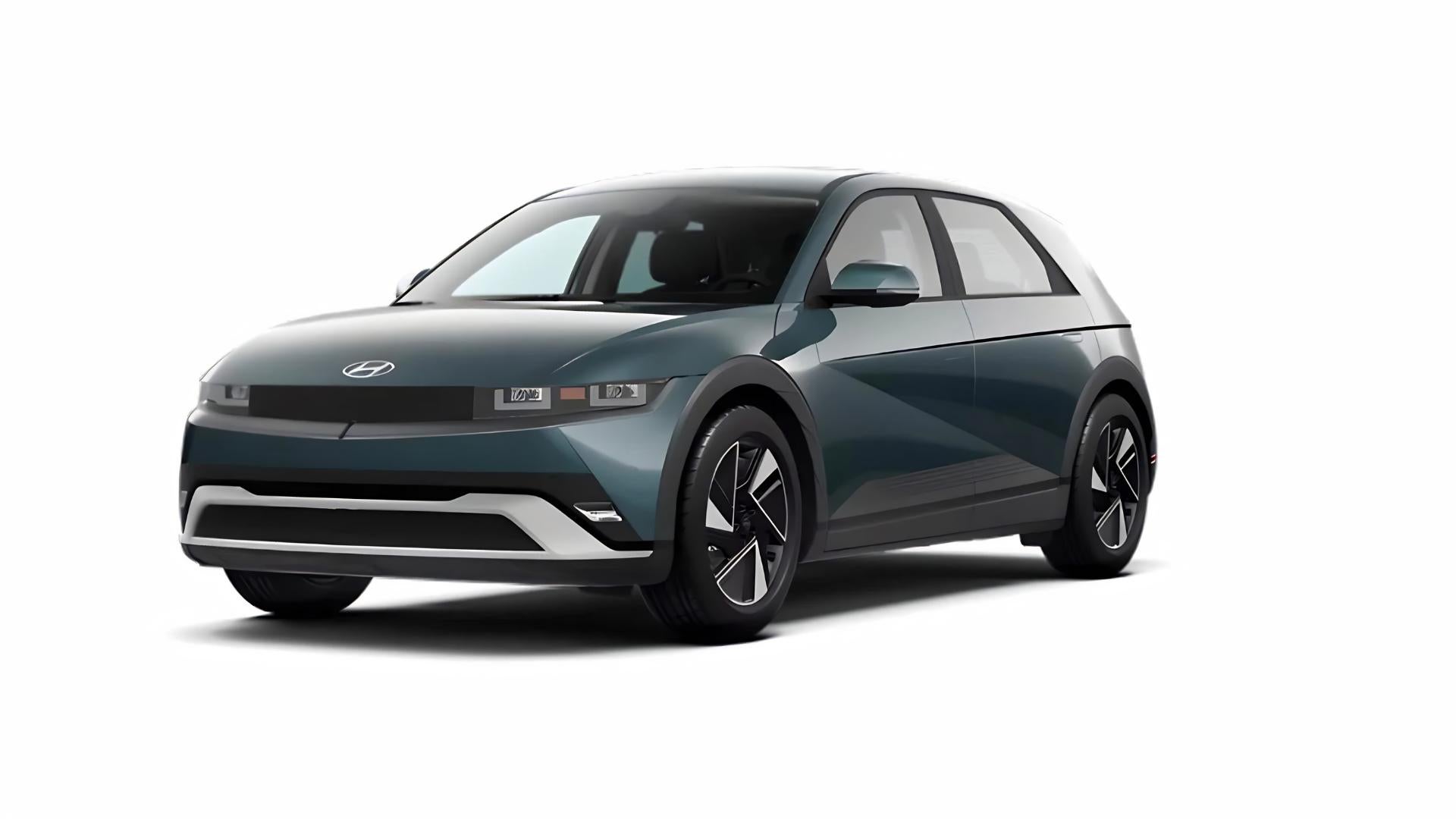
- Ultra-Fast Charging
- Dual 12.3-inch Displays
- Dual 10.3-inch Displays
2026 Tesla Model Y
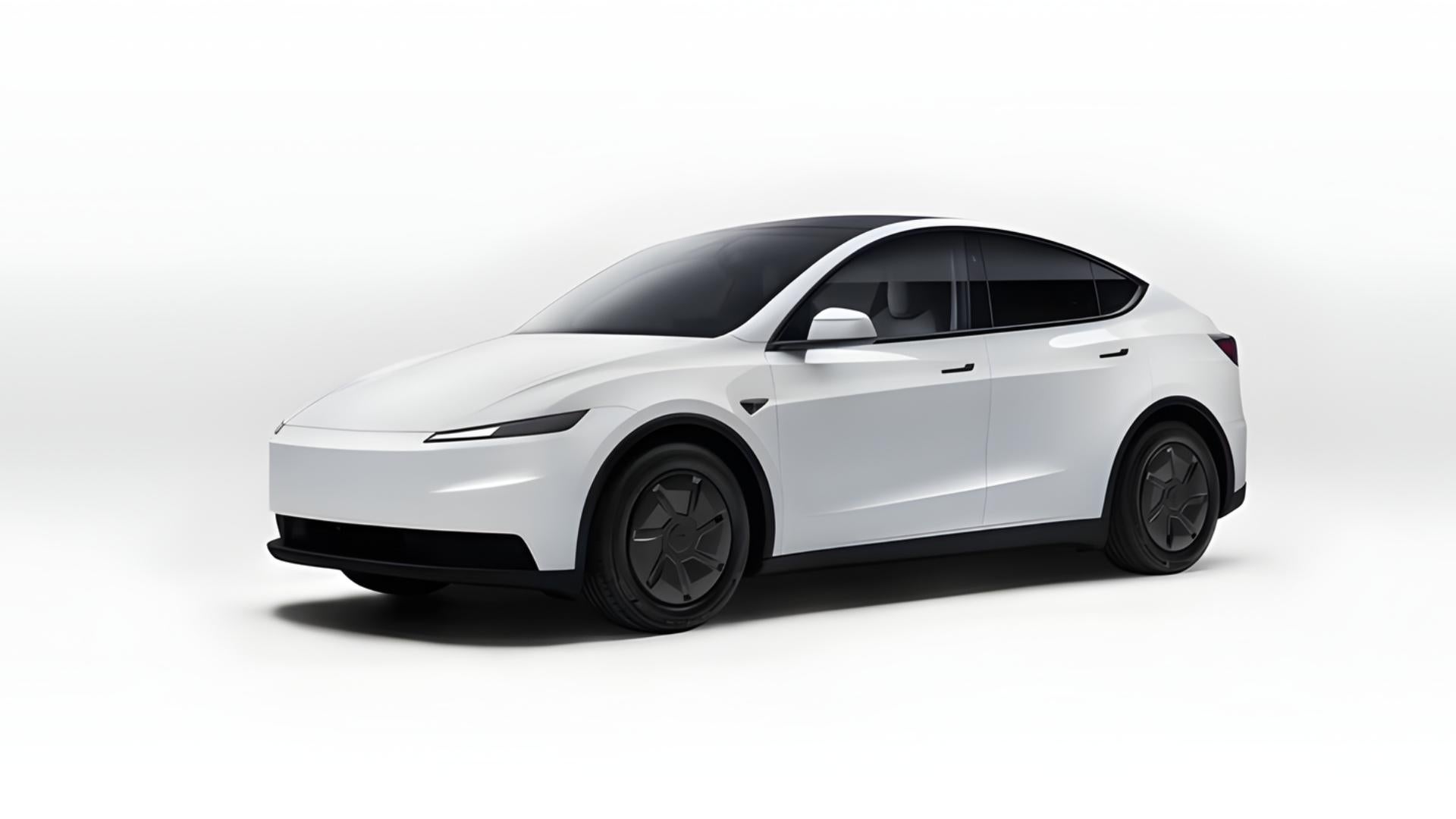
- Fast Charging Capability
- 15.4-inch Touchscreen
- Flexible Interior Space
Modern Design and Everyday Appeal
Styling plays a big role in how these EVs stand out, and each model takes a different approach.
A futuristic and distinctive design gives the Ioniq 5 a bold presence, with clean lines and a unique shape that separates it from traditional SUVs. Inside, the layout feels open and functional, with a focus on comfort and usability.
The Model Y leans toward a more minimalist aesthetic, pairing a smooth exterior with an interior that removes most physical controls in favor of a central touchscreen.
Design highlights:
- Ioniq 5: futuristic styling with a practical, open interior
- Model Y: minimalist design with a clean, modern look
Driving Experience and Performance
Everyday driving feel comes down to comfort and responsiveness.
A balanced ride helps the Ioniq 5 feel composed on a variety of road surfaces, delivering a quiet, comfortable experience in both city and highway conditions. Multiple powertrain options also give drivers flexibility depending on their priorities.
With the Model Y, acceleration is a clear highlight. Even base configurations feel quick, while higher trims deliver impressive performance. The tradeoff can be a firmer ride depending on the setup.
Driving impressions:
- Ioniq 5: smooth, comfortable, and well-balanced
- Model Y: quick acceleration with a sportier feel
Interior Space and Practicality
Interior layout and usability can make a big difference over time.
Passenger space in the Ioniq 5 stands out thanks to its long wheelbase and flat floor design, creating an open feel with plenty of room in both rows.
The Model Y also offers a spacious cabin, strong cargo capacity, and the option of a third row on select trims for added flexibility.
Interior takeaways:
- Both seat 5 passengers comfortably
- Ioniq 5: open layout with generous passenger space
- Model Y: flexible cargo space with optional third row
Technology and User Experience
Technology is a defining part of the EV experience, and these two models take noticeably different approaches.
Dual 12.3-inch displays in the Ioniq 5 create a modern yet familiar layout, separating driver information from infotainment controls. This setup makes it easier to navigate key functions without relying solely on a single screen.
Tesla takes a more centralized approach, with a 15.4-inch touchscreen that controls nearly every function in the Model Y. While visually striking, it relies heavily on touchscreen interaction for everyday controls.
Tech comparison:
- Ioniq 5: dual-screen layout with intuitive controls
- Model Y: large central display with touchscreen-based interface
Safety and Driver Assistance
Advanced safety features come standard in both vehicles, helping support driver confidence.
A comprehensive suite of driver-assistance technologies is included across the Ioniq 5 lineup, offering consistent support in a variety of driving situations.
The Model Y also includes a strong set of safety features, along with available Full Self-Driving capability that expands driver-assist functionality for highway use.
Safety highlights:
- Both offer advanced driver-assistance systems
- Ioniq 5: strong standard safety feature availability
- Model Y: advanced driving tech with Full Self-Driving option
Range, Charging, and Efficiency
Range and charging convenience remain two of the most important factors for EV buyers.
The Model Y offers an estimated 294 to 357 miles of range, depending on configuration, giving it an edge in maximum driving distance.
The Ioniq 5 delivers an estimated 245 to 318 miles of range, which remains competitive for most driving needs. Charging speed is where it stands out, with the ability to go from 10% to 80% in about 20 minutes under the right conditions. Drivers can also explore charging improvements for the Hyundai Ioniq 5 and how they continue to enhance everyday usability.
Efficiency comparison:
- Ioniq 5: ultra-fast charging for reduced downtime
- Model Y: longer maximum driving range
Ownership Value and Everyday Convenience
Long-term ownership experience plays a major role in overall value.
Hyundai gives Ioniq 5 owners a clear advantage with strong warranty coverage and complimentary maintenance. Learn more about Hyundai’s industry-leading warranty coverage and how it supports long-term ownership.
Tesla provides solid battery coverage, but it does not include complimentary scheduled maintenance, and its ownership experience differs from traditional dealership-based support.
Value comparison:
- Ioniq 5: strong warranty and included maintenance
- Model Y: competitive coverage without added maintenance benefits
Hyundai Ioniq 5 Lineup Flexibility
Hyundai’s growing EV lineup gives drivers more flexibility depending on their priorities.
For those interested in higher performance, the 2025 Ioniq 5 N offers a more aggressive driving experience while maintaining the same core design philosophy. You can also explore Hyundai EVs and hybrid options available today to see how the brand continues to expand its electrified offerings.
Why the Hyundai Ioniq 5 is a Smart Choice in Fayetteville
Comparing these two EVs highlights different strengths, but everyday usability often becomes the deciding factor.
The Model Y delivers impressive range and standout acceleration, making it appealing for drivers who prioritize performance and long-distance capability.
A more balanced approach helps the Ioniq 5 stand out, combining fast charging, intuitive technology, and stronger ownership benefits. That combination makes it easier to live with day to day.
FAQs
How fast can the Hyundai Ioniq 5 charge?
The Ioniq 5 can charge from 10% to 80% in about 20 minutes when using a compatible DC fast charger, making it one of the quickest-charging EVs in its class.
Does the Hyundai Ioniq 5 offer enough range for daily driving?
Yes, with up to 318 miles of estimated range, the Ioniq 5 provides more than enough driving distance for most daily commutes and trips.
What makes the Hyundai Ioniq 5 a practical EV choice?
The Ioniq 5 combines fast charging, a spacious interior, and strong ownership benefits, making it a convenient and well-rounded option for everyday use.
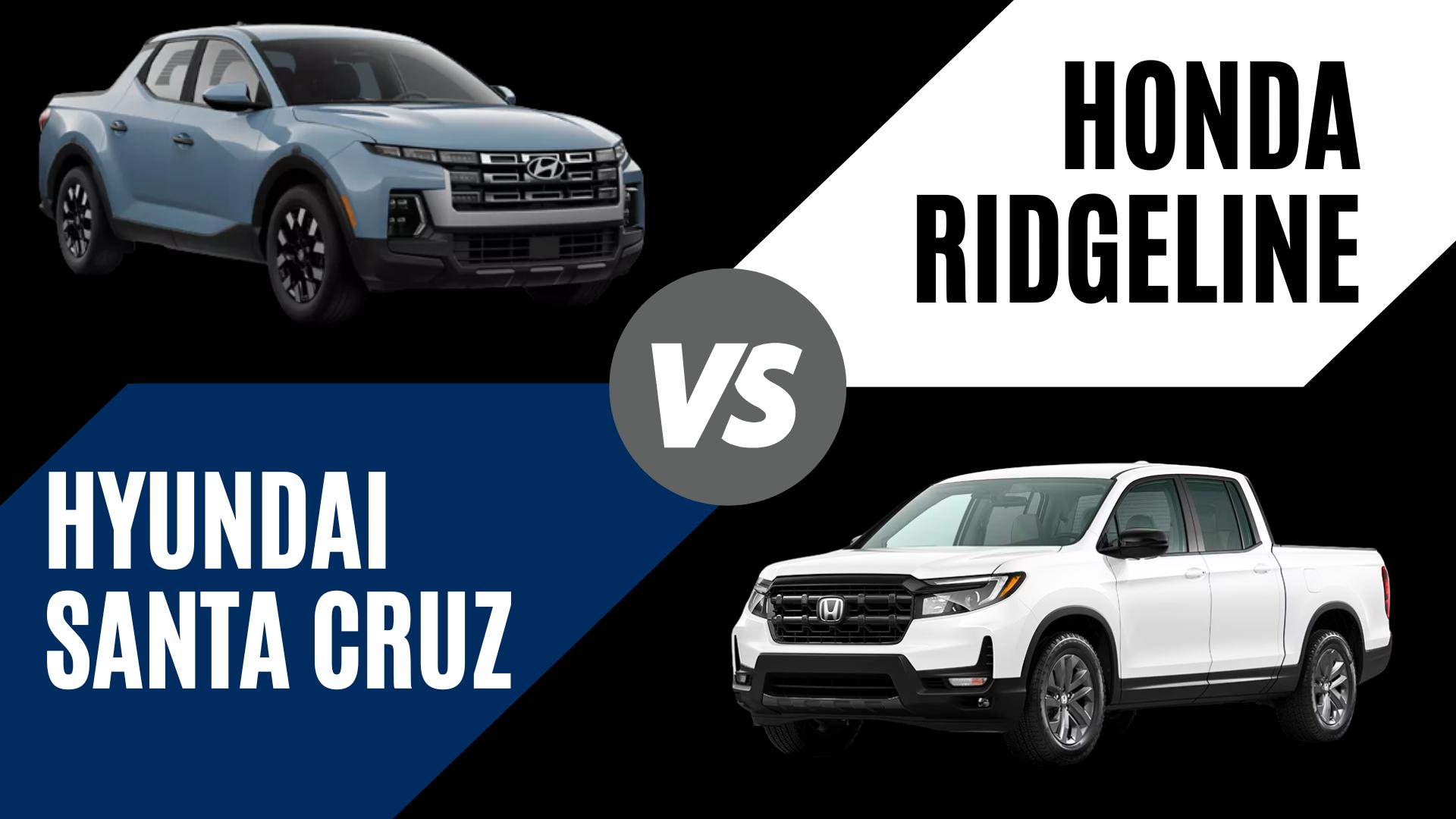
Finding a pickup that fits both daily life and weekend plans around Fayetteville can be tricky. From navigating college traffic near the University of Arkansas to heading out toward the Ozarks, many drivers want capability without the bulk of a full-size truck. That’s exactly why shoppers compare the 2026 Hyundai Santa Cruz vs 2026 Honda Ridgeline in Fayetteville, AR.
Both models offer a smoother ride than traditional trucks and come packed with practical features. But when you look closely at performance options, interior design, technology, and long-term ownership, the Santa Cruz begins to stand apart.
Vehicle Comparison
2026 Hyundai Santa Cruz
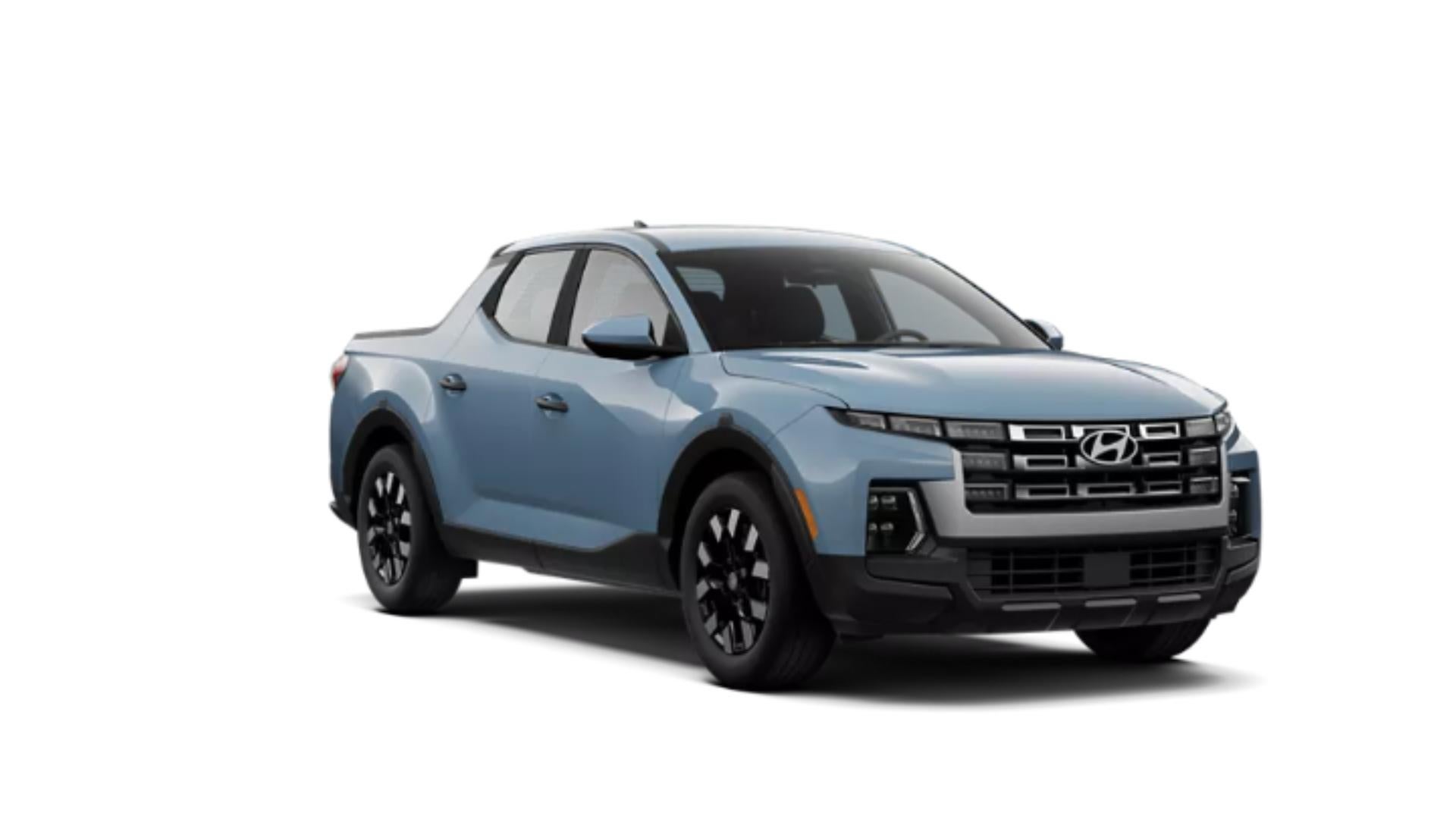
- Turbocharged AWD powertrain
- 4.3-foot bed with underfloor storage
- 12.3-inch infotainment display
2026 Honda Ridgeline
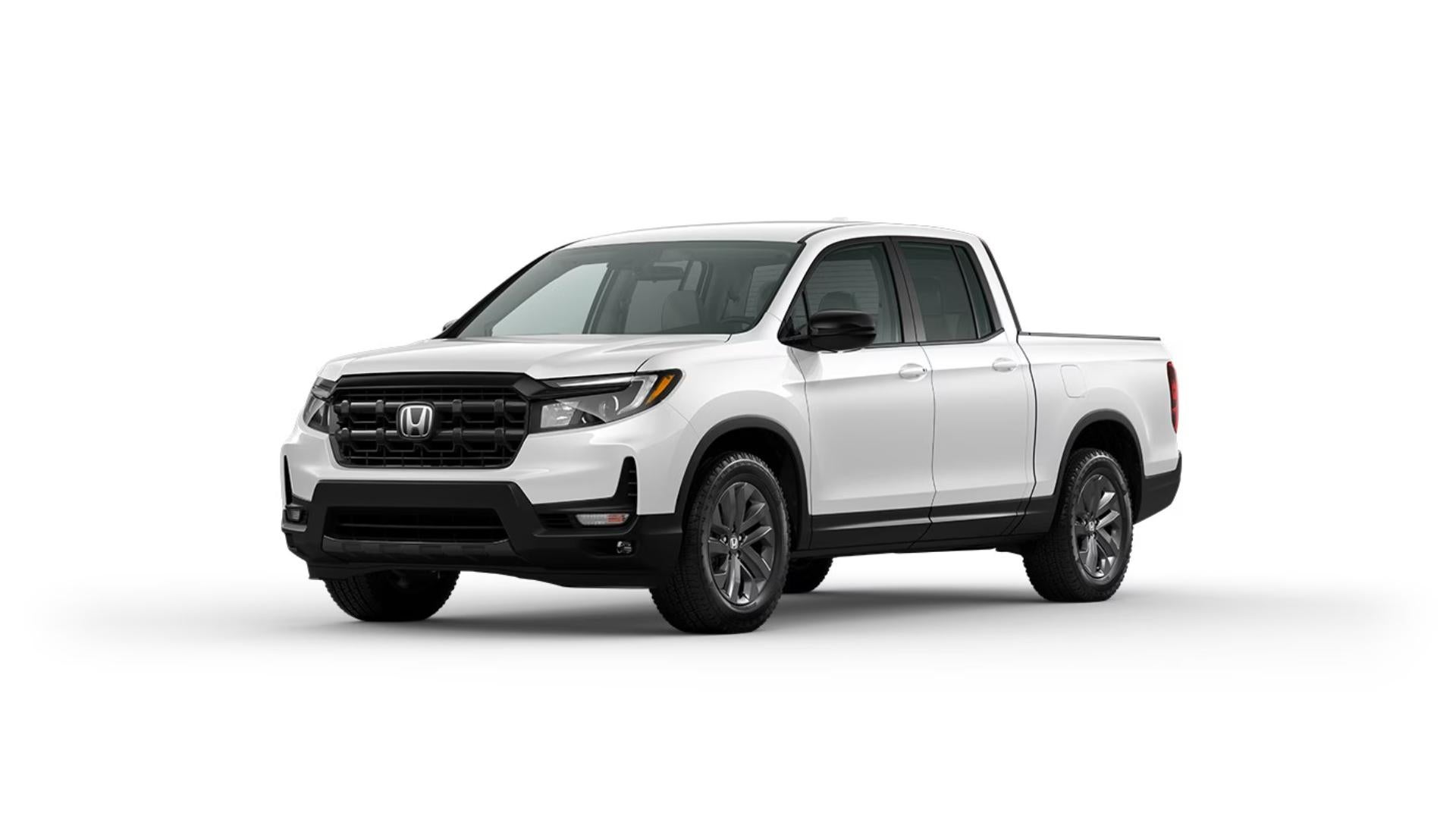
- Standard AWD V6 powertrain
- 5.3-foot bed with in-bed trunk
- 9-inch infotainment touchscreen
A Different Take on Truck Design
These two trucks approach design from completely different angles.
Hyundai gives the Santa Cruz a compact, sport-inspired look. Its smaller footprint and integrated bed make it easier to maneuver through tight areas like downtown Fayetteville or busy parking lots near Dickson Street. It feels more like a crossover with added utility.
The Ridgeline sticks closer to the traditional midsize truck formula. With its longer 5.3-foot bed and familiar proportions, it offers more conventional styling and presence on the road.
For drivers who want something easy to handle in town, the Santa Cruz stands out. For those who prefer a more classic truck look, the Ridgeline fits that expectation.
Performance That Fits Your Driving Style
One of the biggest differences comes down to how much flexibility you want under the hood.
The Santa Cruz offers two engine options:
- 191-horsepower 2.5L engine for efficient commuting
- 281-horsepower turbocharged engine for stronger performance
The turbocharged version adds a noticeable boost in power, especially when merging onto I-49 or accelerating on open highways. It delivers a more engaging drive overall.
The Ridgeline uses a single powertrain:
- 280-horsepower V6
- 9-speed automatic transmission
- Standard all-wheel drive
Its performance feels smooth and predictable, focusing on steady power delivery rather than quick bursts of acceleration.
If having options matters, the Santa Cruz gives you more control over how your truck performs.
Interior Experience and Practicality
Inside the Santa Cruz, the layout feels modern and refined. Available dual 12.3-inch displays create a sleek, connected experience, and the cabin materials reflect Hyundai’s SUV lineup.
The Ridgeline prioritizes practicality. It offers generous rear-seat space and unique features, such as an in-bed trunk and a dual-action tailgate, making it easy to organize tools or gear.
Key differences include:
- Santa Cruz: More modern, tech-forward interior
- Ridgeline: More rear-seat space and storage flexibility
Both models seat five comfortably, but they cater to slightly different priorities.
Technology That Stands Out
Technology is another area where these trucks take different approaches.
The Santa Cruz comes standard with:
- 12.3-inch touchscreen
- Wireless Apple CarPlay and Android Auto
- Available Bose premium audio
- Available digital instrument cluster
The Ridgeline includes:
- 9-inch touchscreen
- Wireless smartphone connectivity
- Standard wireless charging
- Available navigation system
Drivers who want larger screens and a more digital feel will likely prefer the Santa Cruz, while those who prefer straightforward controls may lean toward the Ridgeline.
Safety Features for Everyday Driving
Both trucks include strong safety systems designed for real-world conditions in and around Fayetteville.
The Santa Cruz includes:
- Forward collision avoidance
- Lane-keeping assist
- Blind-spot monitoring
- Driver attention warning
The Ridgeline includes:
- Adaptive cruise control
- Collision mitigation braking
- Lane-keeping assist
- Traffic sign recognition
Each model offers confidence behind the wheel, whether you’re commuting or heading out of town. Hyundai SmartSense is just one of many reasons why you’ll love the Santa Cruz.
Capability and Efficiency Compared
When it comes to capability, both trucks are evenly matched in some areas but differ in efficiency.
Hyundai Santa Cruz
- 191 hp (base) / 281 hp (turbo)
- AWD available; standard on turbo
- Up to 30 mpg highway (base)
- Up to 5,000 lbs towing
Honda Ridgeline
- 280 hp V6
- AWD standard
- Up to 24 mpg highway
- Up to 5,000 lbs towing
The Santa Cruz offers better fuel efficiency and more engine flexibility, while the Ridgeline simplifies things with one setup. Learn more about the Santa Cruz’s towing power.
Long-Term Value and Ownership
Ownership costs are where the Santa Cruz creates a clear advantage.
Hyundai provides:
- 5-year/60,000-mile limited warranty
- 10-year/100,000-mile powertrain warranty
- 3 years of complimentary maintenance
Honda offers:
- 3-year/36,000-mile limited warranty
- 5-year/60,000-mile powertrain warranty
- 2 years of complimentary maintenance
For drivers planning to keep their vehicle long-term, Hyundai’s coverage adds meaningful peace of mind.
Which Truck Works Best in Fayetteville?
Both trucks offer a smooth ride and solid capability, making them practical for everyday driving.
The Ridgeline stands out for its interior space and traditional truck features. However, the Santa Cruz delivers a more versatile experience overall. Its compact size, available turbo performance, better fuel efficiency, and modern technology make it especially well-suited for Fayetteville drivers balancing city life with weekend travel.
At Crain Hyundai of Fayetteville, the 2026 Hyundai Santa Cruz offers a smart blend of capability and comfort. If you’re ready to see how it fits your lifestyle, stop by and explore available models today.
Frequently Asked Questions
Which truck gets better gas mileage?
The Santa Cruz offers higher highway fuel economy, especially with its base engine, making it a strong choice for daily driving.
Can both trucks tow the same amount?
Yes. When properly equipped, both models can tow up to 5,000 pounds.
Is the Santa Cruz or Ridgeline better for long-term ownership?
The Santa Cruz stands out with longer warranty coverage and more included maintenance.
Connect with us


Recent Blog Entries
- 2026 Hyundai Santa Cruz vs 2026 Ford Maverick in Fayetteville, AR
- 2026 Hyundai Kona vs Honda HR-V in Fayetteville, AR
- Hyundai Safety Awards: Hyundai Continues to Earn Top Safety Honors as IIHS Raises the Bar for 2026
- 2026 Hyundai Elantra vs 2026 Honda Civic in Fayetteville, AR
- 2026 Hyundai Tucson vs Nissan Rogue in Fayetteville, AR
Categories
Crain Hyundai Of Fayetteville

Address
1919 W Foxglove Dr
Fayetteville, AR 72704-6987
Phone
- Main 479-717-9148
- Service 479-717-9148
- Sales 479-717-9148
| Monday | 9:00AM - 7:00PM |
| Tuesday | 9:00AM - 7:00PM |
| Wednesday | 9:00AM - 7:00PM |
| Thursday | 9:00AM - 7:00PM |
| Friday | 9:00AM - 7:00PM |
| Saturday | 9:00AM - 7:00PM |
| Sunday | Closed |
| Monday | 7:00AM - 6:00PM |
| Tuesday | 7:00AM - 6:00PM |
| Wednesday | 7:00AM - 6:00PM |
| Thursday | 7:00AM - 6:00PM |
| Friday | 7:00AM - 6:00PM |
| Saturday | 7:00AM - 3:00PM |
| Sunday | Closed |
| Monday | 7:00AM - 6:00PM |
| Tuesday | 7:00AM - 6:00PM |
| Wednesday | 7:00AM - 6:00PM |
| Thursday | 7:00AM - 6:00PM |
| Friday | 7:00AM - 6:00PM |
| Saturday | 7:00AM - 3:00PM |
| Sunday | Closed |
