



Looking Beyond the Spec Sheet
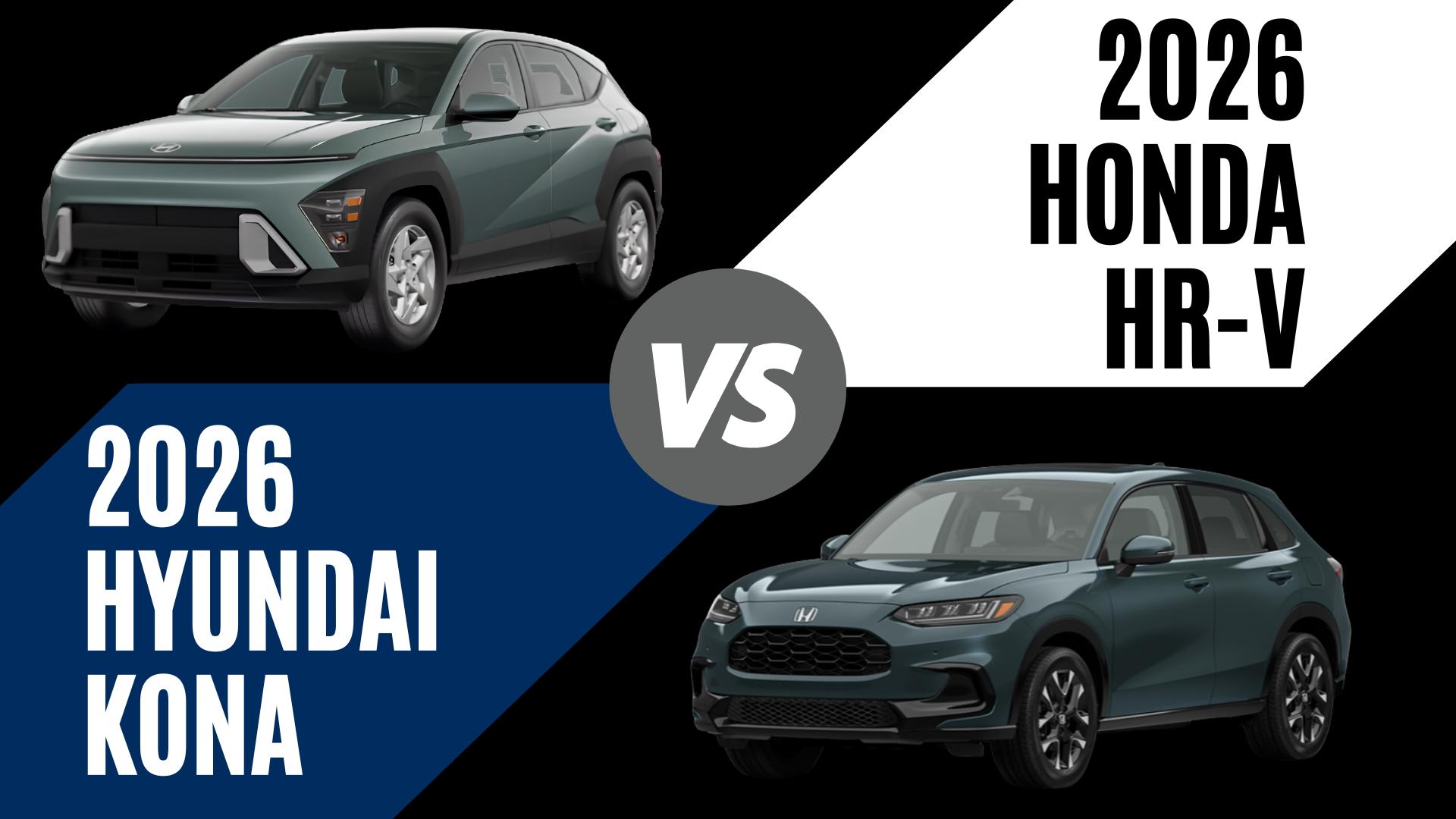
Choosing between the 2026 Hyundai Kona and 2026 Honda HR-V isn’t always as straightforward as it might seem. Both occupy a similar space in the market, offering compact dimensions, seating for five, available all-wheel drive, and the versatility that has made small SUVs one of the fastest-growing vehicle segments.
The similarities are easy to spot. The differences require a closer look.
Performance, technology, interior design, and long-term ownership costs separate these two SUVs more than their size or fuel economy figures. For drivers in Fayetteville and throughout Northwest Arkansas, those distinctions can have a bigger impact on daily life than a simple horsepower or MPG number.
Vehicle Comparison
2026 Hyundai Kona
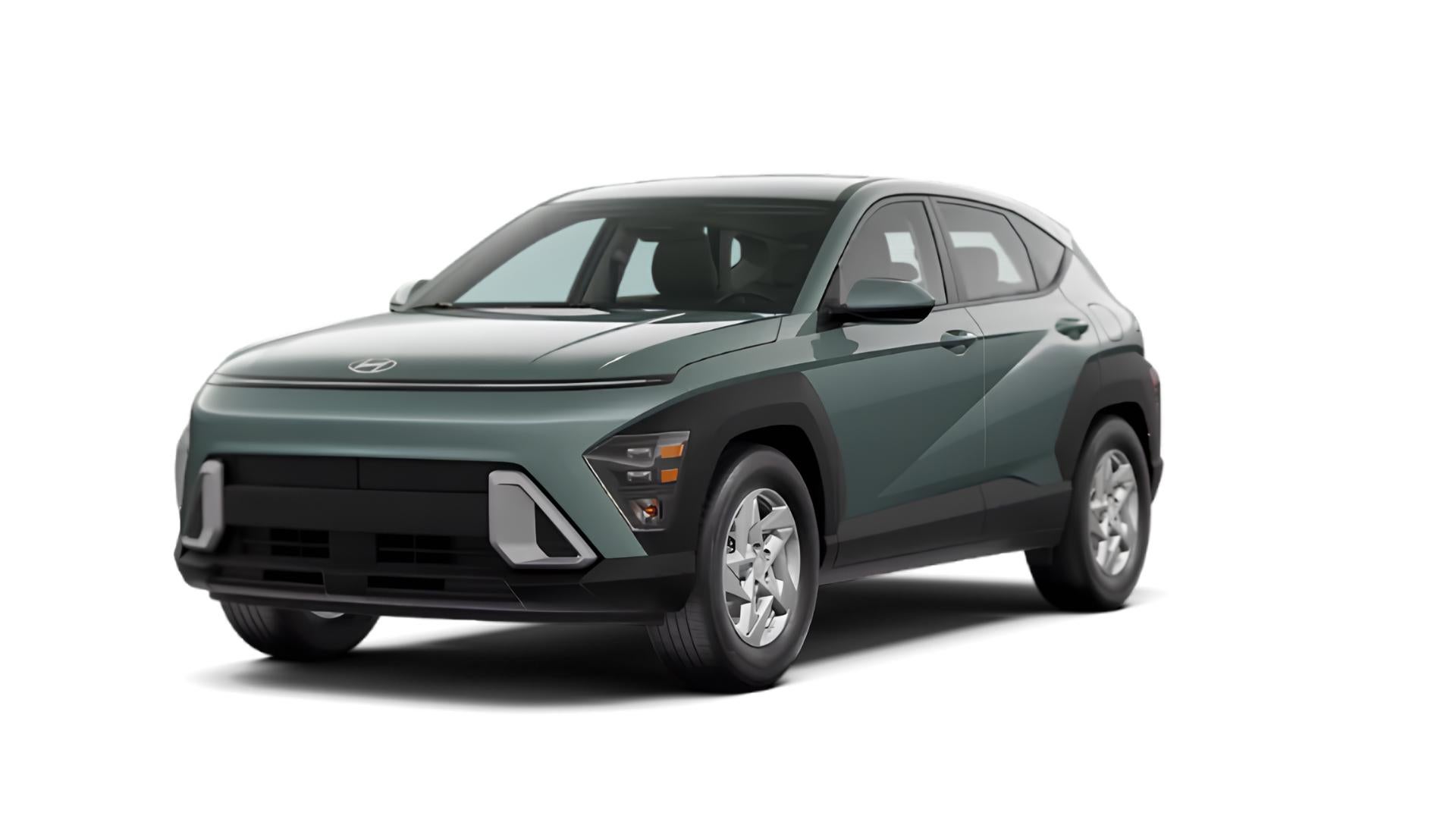
- 12.3-Inch Touchscreen
- Available 190-hp Turbo Engine
- Hyundai Digital Key
2026 Honda HR-V

- 9-Inch Touchscreen
- Honda Sensing Safety Suite
- Practical Cargo Flexibility
Which SUV Feels More Modern?
First impressions matter, and these vehicles create very different ones.
Hyundai designed the Kona to stand out. Sharp styling, distinctive lighting signatures, and a more futuristic overall appearance help create a vehicle that feels like it belongs to a newer generation of compact SUVs. The interior follows a similar philosophy, emphasizing digital displays and a cleaner dashboard layout.
Honda takes a more traditional approach. The HR-V’s styling is understated and practical, with an interior focused on simplicity and ease of use rather than making a bold visual statement.
The same difference carries over into technology. An available 12.3-inch touchscreen gives the Kona a more upscale feel, while the HR-V relies on a smaller 9-inch display and a more conventional interface.
Hyundai Digital Key technology adds another layer of convenience by allowing owners to access certain vehicle functions directly from their smartphone.
What stands out:
- Kona: Modern styling and available 12.3-inch touchscreen
- HR-V: Traditional design and 9-inch touchscreen
- Both: User-friendly layouts designed for daily driving
Does Extra Horsepower Make a Difference?
Horsepower figures don’t always tell the whole story, but they do help explain why these SUVs feel different on the road.
The HR-V uses a 158-horsepower engine that prioritizes consistency and efficiency. Around town, it performs its job well and delivers the predictable driving characteristics many Honda owners appreciate.
The Kona gives buyers more options. In addition to its standard engine, Hyundai offers an available turbocharged powertrain producing up to 190 horsepower. That additional power becomes noticeable during highway merging, passing slower traffic, and accelerating with passengers or cargo onboard.
With its available turbocharged engine, the Kona stands out not only against the HR-V but also against other popular small SUVs like the Subaru Crosstrek.
Performance Takeaways:
- Kona: Available 190-hp turbocharged engine
- HR-V: 158-hp engine focused on everyday efficiency
- Both: Available AWD for additional traction
Which Cabin Works Better for Everyday Life?
Most compact SUV buyers spend far more time inside their vehicle than looking at it from the outside.
Cargo flexibility, storage space, passenger comfort, and overall usability often determine how satisfied owners remain after the excitement of a new purchase wears off.
Hyundai makes strong use of the Kona’s footprint, creating a cabin that feels open and contemporary while maintaining practical storage throughout the interior. Cargo space remains useful for errands, road trips, and everyday tasks around Northwest Arkansas.
Families looking for practical storage, passenger comfort, and everyday versatility will find many of the same family-friendly features that appear throughout Hyundai’s SUV lineup.
The HR-V approaches interior design differently. Honda focuses heavily on straightforward functionality, giving drivers intuitive controls and a layout that feels immediately familiar.
Interior Highlights:
- Kona: Modern cabin and versatile cargo area
- HR-V: Functional design and intuitive controls
- Both: Seating for five passengers
Comparing Safety and Driver Assistance Technology
Safety technology has become one of the most competitive areas in the automotive industry, and both manufacturers equip these SUVs with an impressive collection of driver-assistance features.
The Kona offers adaptive cruise control, lane-centering assist, blind-spot monitoring, and automatic emergency braking. Hyundai continues to expand these technologies throughout its lineup while improving overall usability.
Learn more about Hyundai SmartSense safety features that continue to support driver confidence on everyday commutes and advanced highway-driving technology available on modern Hyundai models.
Honda’s Honda Sensing suite includes adaptive cruise control, lane-keeping assist, and automatic emergency braking. The system remains one of the most recognized safety packages in the segment.
Safety Snapshot:
- Kona: Broader available driver-assistance technology
- HR-V: Honda Sensing standard safety suite
- Both: Advanced active safety features
Efficiency Without Giving Up Flexibility
Fuel economy remains an important consideration, especially for commuters traveling throughout Fayetteville, Springdale, Rogers, and Bentonville.
The Kona delivers approximately 26 to 31 MPG combined, depending on engine and drivetrain configuration. What makes Hyundai’s approach unique is the ability to pair competitive fuel economy with an available performance upgrade.
The HR-V returns approximately 27 to 28 MPG combined while maintaining a simpler powertrain lineup. Drivers who prioritize straightforward operation may appreciate that simplicity, while others may prefer having additional choices available.
Drivers interested in fuel-efficient Hyundai models can also explore additional fuel-conscious options available throughout the Hyundai lineup.
Efficiency Overview:
- Kona: Strong MPG with available performance upgrades
- HR-V: Competitive efficiency and simple operation
- Both: Practical daily fuel economy
Looking Beyond the Purchase Price
The ownership experience doesn’t end when the paperwork is signed.
Warranty coverage, maintenance costs, and long-term value can have just as much influence on ownership satisfaction as the vehicle itself.
This is an area where Hyundai continues to separate itself from many competitors. Complimentary maintenance and extensive warranty coverage provide additional value long after the vehicle leaves the dealership.
For many shoppers, America’s Best Warranty continues to be one of Hyundai’s strongest ownership advantages.
Honda’s reputation for long-term reliability remains one of the HR-V’s strongest selling points, but Hyundai’s ownership package makes a compelling case for the Kona.
Ownership Considerations:
- Kona: Longer warranty coverage and complimentary maintenance
- HR-V: Strong reputation for reliability
- Both: Solid long-term ownership potential
Which Small SUV Makes More Sense for Fayetteville Drivers?
The HR-V succeeds by keeping things simple. It delivers practical transportation, competitive efficiency, and the familiarity that has helped Honda build a loyal following.
The Kona takes a broader approach. More available horsepower, more advanced technology, a more distinctive design, and stronger ownership benefits create an SUV that feels like it’s offering more than basic transportation.
For many shoppers throughout Fayetteville and Northwest Arkansas, that combination makes the 2026 Hyundai Kona the more complete overall package.
FAQs
Which SUV offers more available horsepower?
The Hyundai Kona offers an available 190-horsepower turbocharged engine, while the Honda HR-V produces 158 horsepower.
Does the Hyundai Kona offer a larger touchscreen?
Yes. The Kona offers an available 12.3-inch touchscreen, while the Honda HR-V uses a 9-inch display.
Which SUV provides better long-term ownership value?
Both vehicles offer strong value, but the Kona adds longer warranty coverage and complimentary maintenance that can help reduce ownership costs over time.
Connect with us


Recent Blog Entries
- 2026 Hyundai Palisade vs 2027 Kia Telluride in Fayetteville, AR
- 2026 Hyundai Tucson vs Volkswagen Tiguan in Fayetteville, AR
- Why Cars.com Keeps Naming Hyundai a Top Value Pick in 2026
- 2026 Hyundai Santa Cruz vs 2026 Ford Maverick in Fayetteville, AR
- 2026 Hyundai Kona vs Honda HR-V in Fayetteville, AR
Categories
Crain Hyundai Of Fayetteville
Address
1919 W Foxglove Dr
Fayetteville, AR 72704-6987
Phone
- Main 479-717-9148
- Service 479-717-9148
- Sales 479-717-9148
| Monday | 9:00AM - 7:00PM |
| Tuesday | 9:00AM - 7:00PM |
| Wednesday | 9:00AM - 7:00PM |
| Thursday | 9:00AM - 7:00PM |
| Friday | 9:00AM - 7:00PM |
| Saturday | 9:00AM - 7:00PM |
| Sunday | Closed |
| Monday | 7:00AM - 6:00PM |
| Tuesday | 7:00AM - 6:00PM |
| Wednesday | 7:00AM - 6:00PM |
| Thursday | 7:00AM - 6:00PM |
| Friday | 7:00AM - 6:00PM |
| Saturday | 7:00AM - 3:00PM |
| Sunday | Closed |
| Monday | 7:00AM - 6:00PM |
| Tuesday | 7:00AM - 6:00PM |
| Wednesday | 7:00AM - 6:00PM |
| Thursday | 7:00AM - 6:00PM |
| Friday | 7:00AM - 6:00PM |
| Saturday | 7:00AM - 3:00PM |
| Sunday | Closed |
