



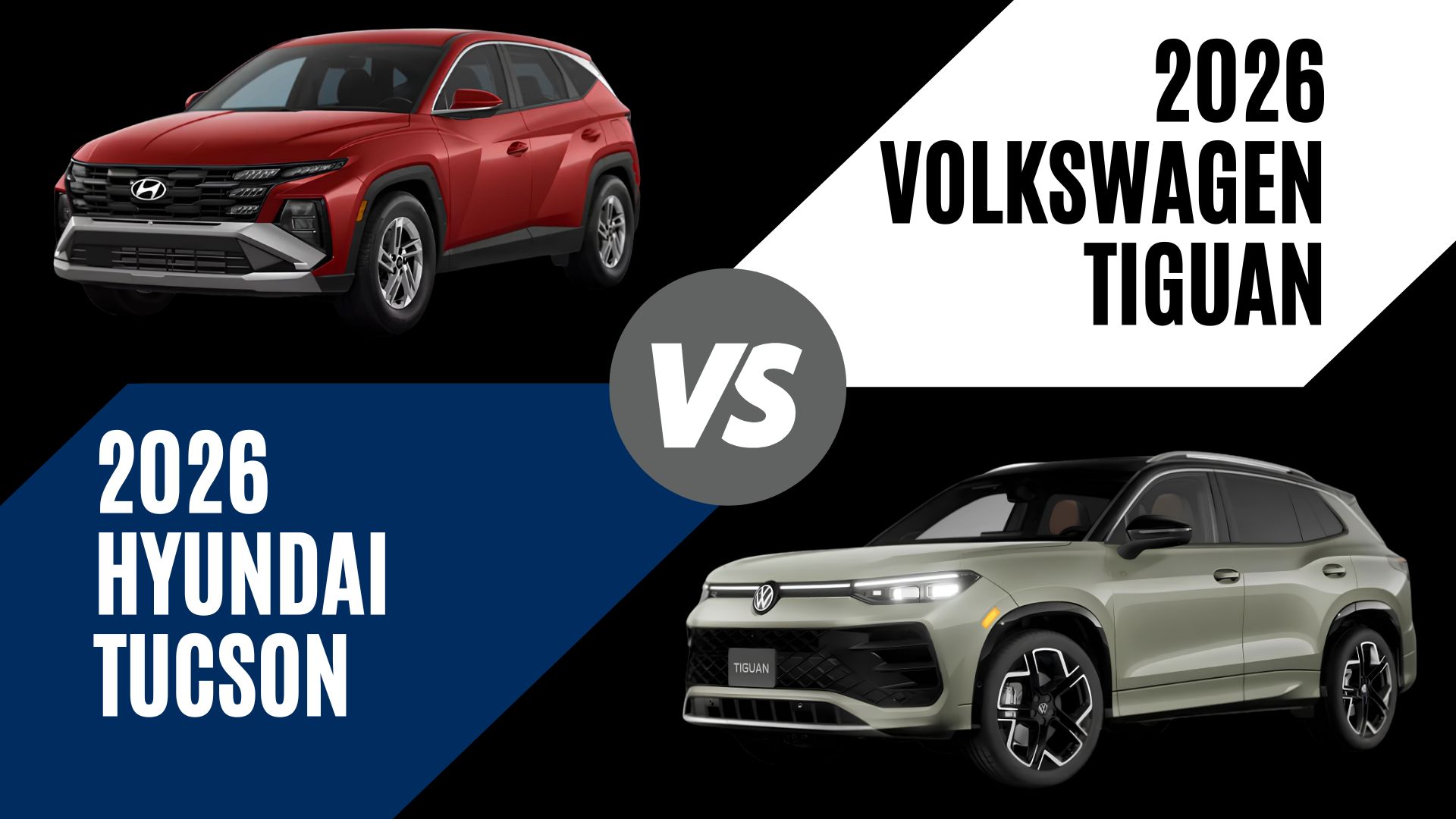
Technology and Everyday Refinement in a Compact SUV
Compact SUV shoppers in Fayetteville, AR, increasingly care about more than seating and cargo space. They want a cabin that feels genuinely modern and a drive that doesn’t wear them out day to day. The 2026 Hyundai Tucson and 2026 Volkswagen Tiguan both compete for that buyer, bringing spacious interiors, driver-assistance technology, and available all-wheel drive to a crowded segment.
This comparison focuses on the gas-powered Tucson lineup, despite the Tucson being available in hybrid and PHEV versions. Full trim details for the gas Tucson are available on the 2026 Hyundai Tucson model research page.
Vehicle Comparison
2026 Hyundai Tucson
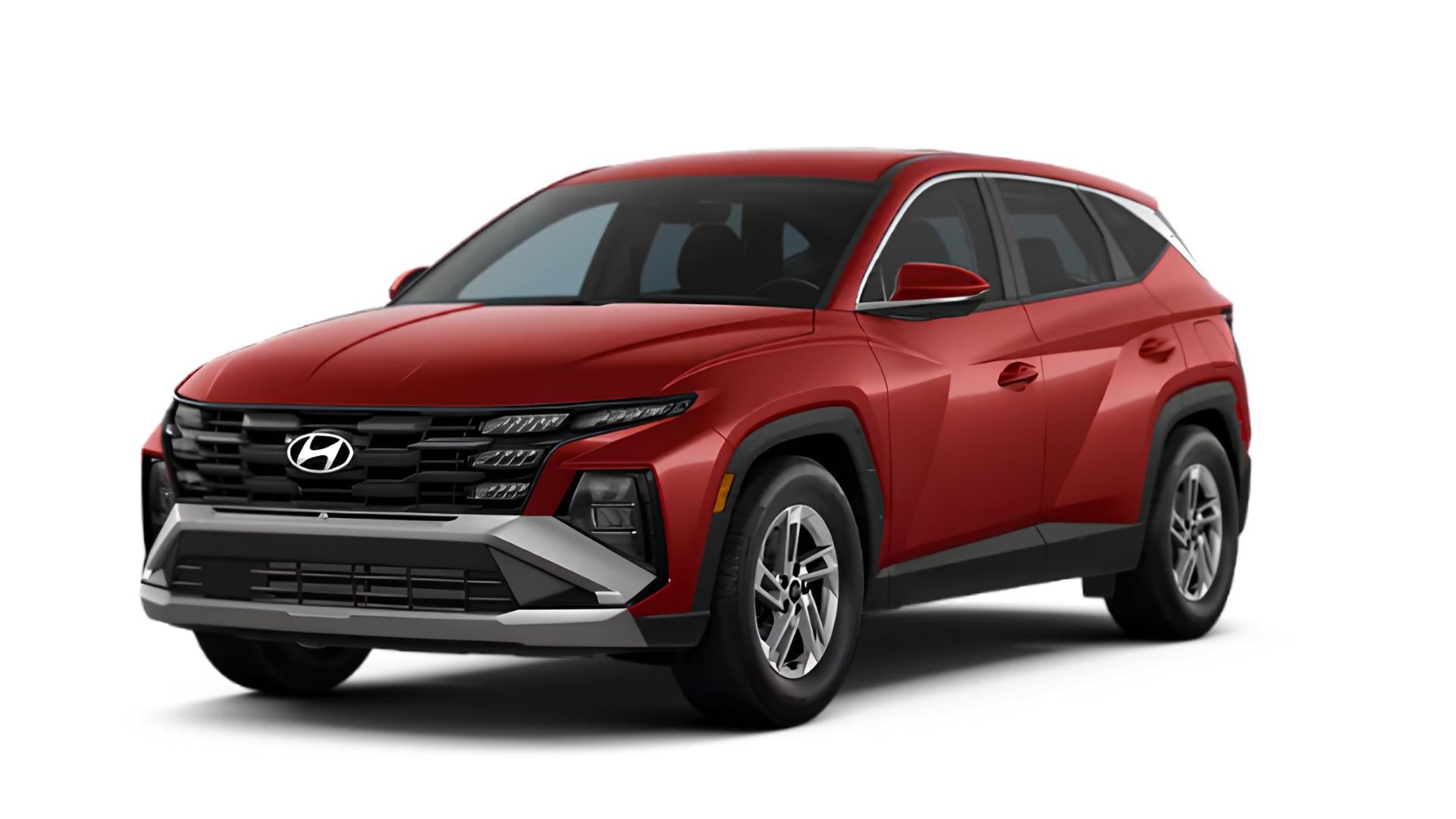
- 12.3-inch Touchscreen
- Hyundai Digital Key 2
- Hyundai SmartSense Safety Suite
2026 Volkswagen Tiguan
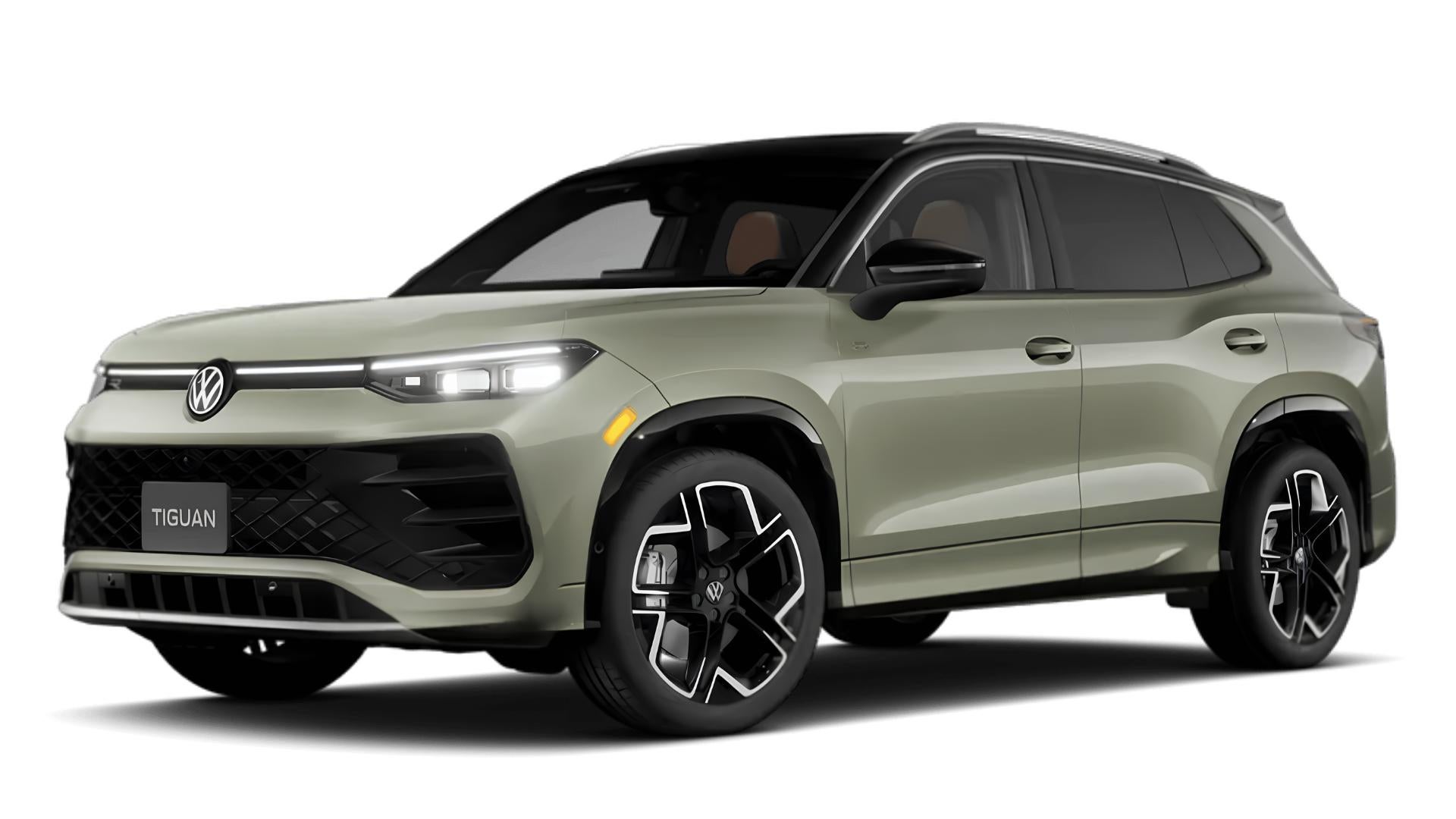
- 12.9-inch Touchscreen
- Standard Adaptive Cruise Control
- IQ.DRIVE Safety Suite
Cabin Design and Everyday Feel
A simple, modern dashboard defines the Tucson’s interior, with a digital gauge display, column-mounted shifter, and a dedicated climate control panel that keeps physical buttons in easy reach. Quality materials and a thoughtfully arranged layout carry through the cabin, echoing the design language found throughout Hyundai’s current lineup.
European styling cues set the Tiguan apart instead, with a column-mounted shifter of its own, freeing up console space for additional storage. Upscale options like leather upholstery and genuine wood trim elevate the cabin on higher trims, giving it a distinct personality in a segment where many interiors start to look alike.
First Look:
- Tucson: Simple, modern dashboard with physical climate controls
- Tiguan: European-inspired design with available leather and wood trim
- Both: Column-mounted shifters free up console storage
Screens, Software, and Everyday Tech
Technology increasingly shapes how a compact SUV feels day to day, and both of these bring real depth here.
A 12.3-inch touchscreen comes standard across the Tucson lineup, with SEL Premium and Limited trims stepping up to a combined 12.3-inch digital gauge cluster paired with a navigation-equipped touchscreen. Hyundai Digital Key rounds out the tech story on higher trims, letting compatible smartphones unlock, start, and even share access to the vehicle.
A standard 12.9-inch touchscreen anchors the Tiguan instead, with an available 15-inch display on higher trims running Volkswagen’s Digital Cockpit Pro software. A rotary volume knob and physical drive-mode controls remain in place even as the screens grow, a detail some drivers will appreciate over an all-touch interface.
Tech Rundown:
- Tucson: Standard 12.3-inch touchscreen, available digital gauge cluster with navigation, Digital Key convenience
- Tiguan: Standard 12.9-inch touchscreen, available 15-inch display, retained physical rotary controls
- Both: Wireless smartphone connectivity across the lineup
Power and Everyday Drivability
Under the hood, these two SUVs take noticeably different approaches.
A 187-hp 2.5-liter four-cylinder powers every gas Tucson trim, paired with an eight-speed automatic and available all-wheel drive. Acceleration stays adequate rather than exciting, reaching 60 mph in roughly 8.8 seconds in testing, but the tradeoff shows up in a notably quiet, refined ride at cruising speed.
The Tiguan splits its lineup into trim levels. A 201-hp turbocharged 2.0-liter four-cylinder handles the S, SE, and SE R-Line Black trims, while the new-for-2026 SEL R-Line Turbo steps up to a 268-hp version of that same engine with standard all-wheel drive, reaching 60 mph in a considerably quicker 6.7 seconds.
Under the Hood:
- Tucson: 187-hp 2.5L four-cylinder across all gas trims, 8.8-second 0-60
- Tiguan: 201-hp base turbo, 268-hp SEL R-Line Turbo, 6.7-second 0-60 (top trim)
- Both: Available all-wheel drive
Room for Passengers and Cargo
Interior space plays a real role in day-to-day satisfaction with a compact SUV, and both deliver generous room for the segment.
The Tucson’s rear seat and cargo area both run larger than many rivals, fitting 9 carry-on suitcases behind the back row and 22 with the seatbacks folded down.
Added length gives the redesigned Tiguan a genuine practicality boost as well, fitting 9 carry-on suitcases behind the rear seats and 25 with them folded, though the previous generation’s optional third row is no longer available.
Space Notes:
- Tucson: 9 suitcases behind rear seats, 22 with seats folded
- Tiguan: 9 suitcases behind rear seats, 25 with seats folded
- Both: Seating for five, no third-row option
Confidence Behind the Wheel
Driver-assistance technology has become table stakes in this segment, and both SUVs deliver real depth.
Standard automated emergency braking with pedestrian detection and lane-keeping assist come on every Tucson, backed by Hyundai SmartSense on higher trims, including adaptive cruise control with lane-centering. Highway Driving Assist 2 adds another layer of ease for longer stretches on the highway.
Standard adaptive cruise control with lane-centering comes on every Tiguan trim, along with automated emergency braking and lane-keeping assist. A total of 10 airbags, including driver knee, center, and rear side airbags, backs up that active safety suite.
Safety Snapshot:
- Tucson: Hyundai SmartSense and Highway Driving Assist 2 on select trims
- Tiguan: Standard adaptive cruise control across the lineup, 10 total airbags
- Both: Standard automated emergency braking and lane-keeping assist
Fuel Economy for Fayetteville Commutes
Efficiency still matters for daily commuters throughout Fayetteville, Springdale, Rogers, and Bentonville.
Front-wheel-drive Tucson models are rated at 25 mpg in the city, 33 mpg on the highway, for a combined 28 mpg. All-wheel-drive models are rated at 24 mpg in the city, 30 mpg on the highway, for a combined 26 mpg.
The Tiguan’s base engine reaches up to 26 mpg in the city and 34 mpg on the highway in front-wheel-drive trims, dropping to 22 mpg in the city and 30 mpg on the highway with 4Motion all-wheel drive. The more powerful SEL R-Line Turbo comes in slightly lower on the highway, at 29 mpg.
Efficiency Notes:
- Tucson: 28 combined mpg (FWD), 26 combined mpg (AWD)
- Tiguan: Up to 26 city/34 highway mpg (FWD, base engine), 29 highway (SEL R-Line Turbo)
- Both: Competitive efficiency for the segment given their power output
A Note on the Tucson Hybrid and PHEV
Drivers who want more power without stepping up to the Tiguan’s turbocharged engine have another option within the Tucson lineup itself. The Tucson Hybrid and Tucson Plug-In Hybrid both offer quicker acceleration than the standard gas engine while adding electrified efficiency. More details on each are available on the Tucson Hybrid model research page and Tucson Plug-In Hybrid model research page.
Ownership Value Over Time
Warranty coverage often separates these two brands more than any single feature does.
Hyundai backs the Tucson with an industry-leading warranty, including a 5-year/60,000-mile limited warranty, a 10-year/100,000-mile powertrain warranty, and 3 years or 36,000 miles of complimentary scheduled maintenance.
Volkswagen covers the Tiguan with a 4-year/50,000-mile limited and powertrain warranty, along with 2 years or 20,000 miles of complimentary maintenance, solid coverage, but a clear step behind Hyundai’s package.
Value Points:
- Tucson: 10-year/100,000-mile powertrain warranty, 3 years of complimentary maintenance
- Tiguan: 4-year/50,000-mile powertrain warranty, 2 years of complimentary maintenance
- Tucson holds a clear advantage on long-term coverage
Which Compact SUV Fits Your Life in Fayetteville?
Both the Tucson and Tiguan bring genuine strengths to this segment, and the right choice often comes down to what matters most day to day.
Drivers who want a quiet, refined ride paired with exceptional warranty coverage may find the Tucson lines up well with their priorities. Others chasing stronger performance, particularly with the Tiguan’s available 268-hp engine, or European design character, may lean toward the Tiguan instead.
Drivers weighing other options can also see how the Tucson stacks up against the Honda CR-V or the Nissan Rogue. Either way, drivers throughout Fayetteville, Springdale, Rogers, and Bentonville get a genuinely well-equipped compact SUV built for daily life in Northwest Arkansas.
FAQs
Q: Does the Hyundai Tucson offer a more powerful engine option like the Tiguan’s 268-hp trim?
A: The gas Tucson uses a single 187-hp engine across all trims. Drivers wanting more power from the Tucson lineup can look to the Tucson Hybrid or Plug-In Hybrid, both of which offer quicker acceleration than the standard gas engine.
Q: How does the Tucson’s warranty compare to the Tiguan’s?
A: The Tucson offers a notably longer 10-year/100,000-mile powertrain warranty and 3 years of complimentary maintenance, compared to the Tiguan’s 4-year/50,000-mile powertrain warranty and 2 years of complimentary maintenance.
Q: Which SUV offers more cargo space with the seats folded down?
A: The Tiguan holds a slight edge with 25 carry-on suitcases with the rear seats folded, compared to 22 in the Tucson, though both offer similar space with seats in place.
Connect with us


Recent Blog Entries
- 2026 Hyundai Palisade vs 2027 Kia Telluride in Fayetteville, AR
- 2026 Hyundai Tucson vs Volkswagen Tiguan in Fayetteville, AR
- Why Cars.com Keeps Naming Hyundai a Top Value Pick in 2026
- 2026 Hyundai Santa Cruz vs 2026 Ford Maverick in Fayetteville, AR
- 2026 Hyundai Kona vs Honda HR-V in Fayetteville, AR
Categories
Crain Hyundai Of Fayetteville

Address
1919 W Foxglove Dr
Fayetteville, AR 72704-6987
Phone
- Main 479-717-9148
- Service 479-717-9148
- Sales 479-717-9148
| Monday | 9:00AM - 7:00PM |
| Tuesday | 9:00AM - 7:00PM |
| Wednesday | 9:00AM - 7:00PM |
| Thursday | 9:00AM - 7:00PM |
| Friday | 9:00AM - 7:00PM |
| Saturday | 9:00AM - 7:00PM |
| Sunday | Closed |
| Monday | 7:00AM - 6:00PM |
| Tuesday | 7:00AM - 6:00PM |
| Wednesday | 7:00AM - 6:00PM |
| Thursday | 7:00AM - 6:00PM |
| Friday | 7:00AM - 6:00PM |
| Saturday | 7:00AM - 3:00PM |
| Sunday | Closed |
| Monday | 7:00AM - 6:00PM |
| Tuesday | 7:00AM - 6:00PM |
| Wednesday | 7:00AM - 6:00PM |
| Thursday | 7:00AM - 6:00PM |
| Friday | 7:00AM - 6:00PM |
| Saturday | 7:00AM - 3:00PM |
| Sunday | Closed |
