



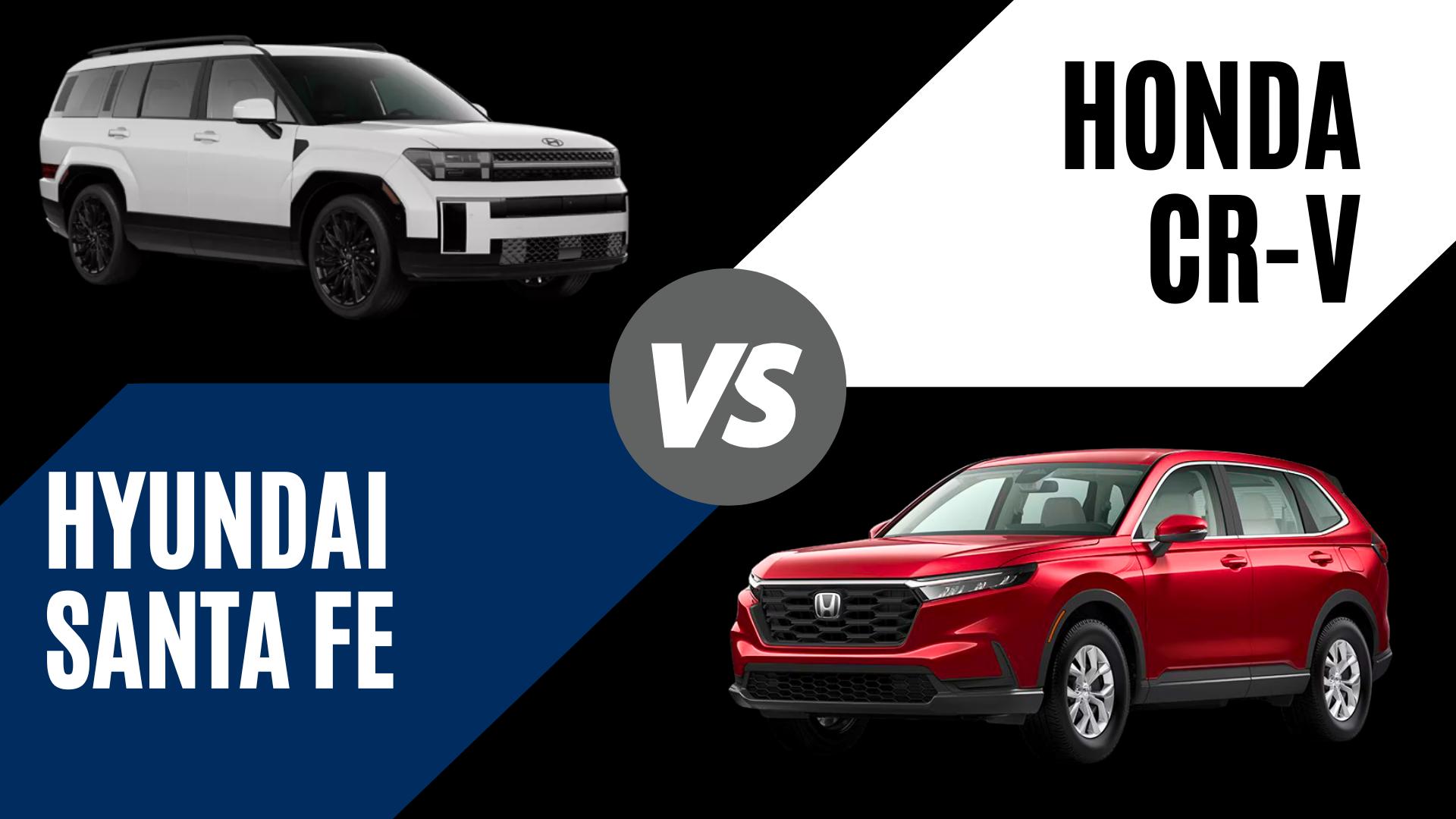
Compact Practicality or Midsize Versatility for Fayetteville Drivers?
SUV shoppers in Fayetteville, AR often find themselves choosing between a trusted compact SUV and a larger, more flexible midsize option. The 2026 Hyundai Santa Fe and the 2026 Honda CR-V both deliver comfort, technology, and everyday usability, but they’re designed for slightly different priorities.
This comparison focuses strictly on the gas-powered 2026 Hyundai Santa Fe and gas-powered 2026 Honda CR-V, so there’s no hybrid specification overlap. Whether you’re commuting through Northwest Arkansas, navigating school drop-offs in Springdale, or planning weekend drives beyond Rogers, this breakdown clarifies which SUV better fits your needs.
For a full trim-by-trim overview, explore our 2026 Hyundai Santa Fe research page before visiting in person.
Vehicle Comparison
2026 Hyundai Santa Fe

- Standard Third Row
- Dual 12.3-Inch Displays
- 10-Year/100,000-Mile Powertrain Warranty
2026 Honda CR-V
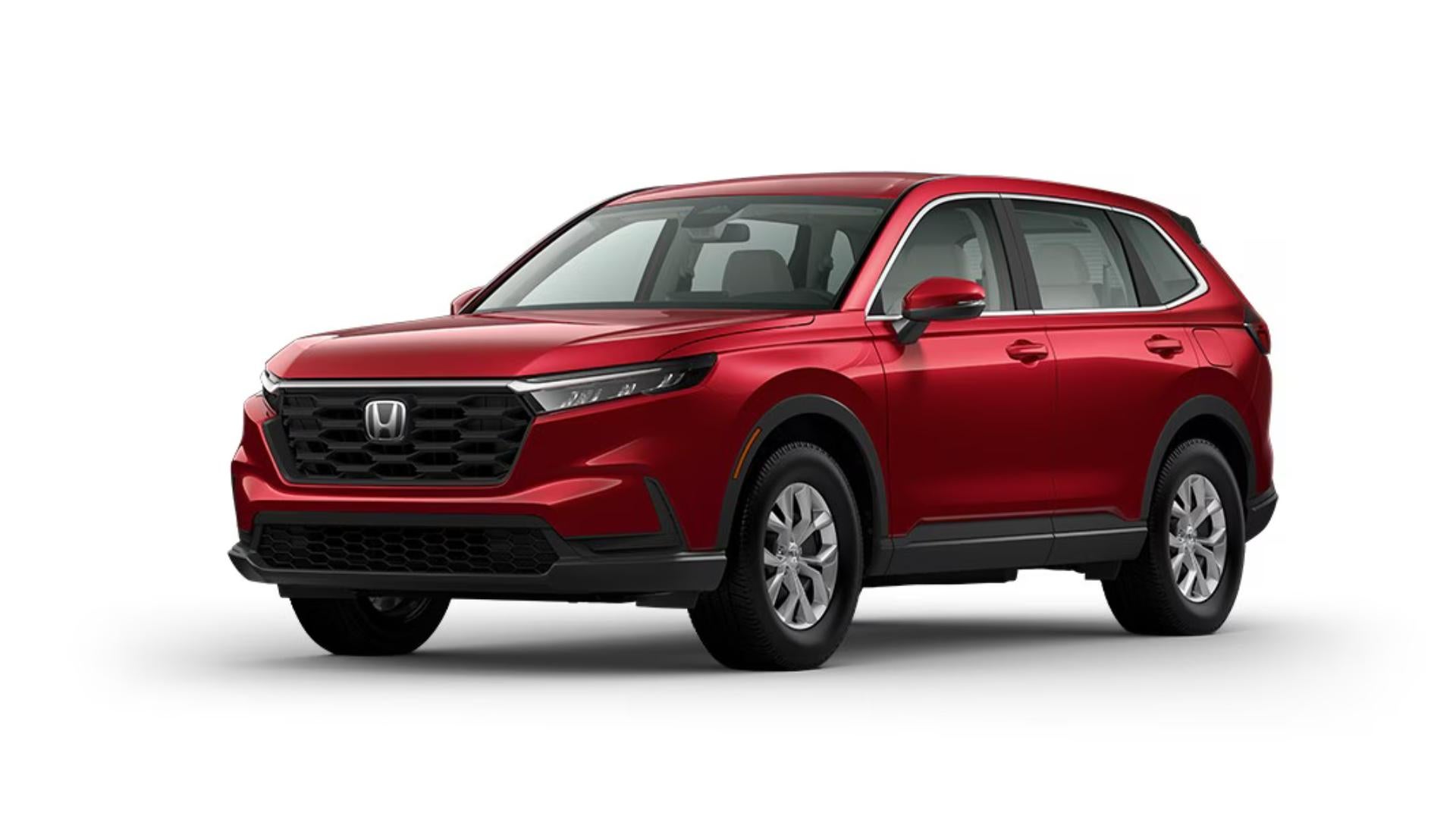
- 9-Inch Touchscreen Standard
- Honda Sensing Safety Suite
- 9-inch infotainment touchscreen
Design & Styling: Bold Presence vs Refined Simplicity
Visual identity sets the tone before you ever step inside.
Hyundai’s midsize SUV makes a confident first impression with its squared-off proportions, upright stance, and distinctive lighting signature. The overall look feels deliberate and substantial, closer to premium territory than traditional family utility. Around Fayetteville, it carries more visual presence than many competitors in its price range.
Step inside, and that upscale ambition continues. Available premium materials, a wide digital display layout, and thoughtful storage details give the cabin a modern, open feel that prioritizes both comfort and aesthetics.
Honda’s compact alternative leans into timeless design rather than bold statements. Clean exterior lines and balanced proportions give it broad appeal, while the honeycomb-textured dash and intuitive control layout emphasize functionality. It’s polished and well-built, simply more reserved in personality.
Key Design Differences
- Santa Fe delivers bold midsize SUV styling
- CR-V emphasizes clean, practical compact design
- Hyundai leans more upscale in overall presentation
Ride & Performance: Stronger Power vs Smooth Efficiency
Power output creates a clear separation between these two SUVs.
Under the hood of Hyundai’s midsize offering is a 277-hp turbocharged 2.5-liter engine paired with an eight-speed automatic transmission. The traditional automatic provides smooth, predictable shifts, and the added horsepower is noticeable when merging onto I-49 or passing slower traffic. Ride tuning favors comfort, keeping highway cruising quiet and composed.
By comparison, Honda’s compact SUV uses a 190-hp turbocharged 1.5-liter engine matched to a continuously variable transmission (CVT). The setup prioritizes efficiency and steady daily driving rather than quick acceleration. Around town, it feels balanced and refined, though it doesn’t deliver the same surge of power at higher speeds.
Front-wheel drive is standard on both models, with available all-wheel drive adding confidence during Arkansas storms.
Performance at a Glance
- Santa Fe: 277 hp with 8-speed automatic
- CR-V: 190 hp with CVT
- AWD available on both
- Hyundai provides stronger highway acceleration
Interior & Space: Three Rows vs Smart Compact Layout
Passenger flexibility is often where the real difference becomes clear.
With seating for six or seven, Hyundai’s SUV includes a standard third row that expands its usefulness for growing families. While the rearmost seats are best suited for children or shorter trips, their availability adds versatility that compact competitors simply can’t match. Folding both rear rows opens generous cargo capacity for road trips or outdoor gear. That extra flexibility becomes especially useful when planning regional adventures like 3 Weekend Getaways You Can Drive to From Fayetteville, AR.
In contrast, the CR-V sticks to a two-row layout with seating for five. Within the compact segment, it performs impressively. Rear legroom is generous, and cargo space behind the second row approaches 39 cubic feet. For households that don’t need a third row, that balance of maneuverability and interior room works extremely well.
Space & Seating Breakdown
- Santa Fe: Standard third row, 6–7 passengers
- CR-V: Two rows, 5 passengers
- CR-V offers strong compact cargo space
- Santa Fe provides greater overall versatility
Technology: Larger Displays vs Straightforward Interface
Technology is a strength for both SUVs in 2026.
Inside the Santa Fe, dual 12.3-inch displays anchor the dashboard with one serving as a digital gauge cluster and the other handling infotainment duties. Wireless Apple CarPlay and Android Auto come standard, and upper trims add features like a head-up display and Bose premium audio. The overall presentation feels immersive and modern.
Honda equips every CR-V with a 9-inch touchscreen for 2026, along with wireless smartphone integration and a wireless charging pad. Higher trims introduce a 10.2-inch digital instrument display. Rather than dramatic visual flair, the focus remains on clarity and ease of use.
Technology Highlights
- Santa Fe: Dual 12.3-inch displays
- CR-V: Standard 9-inch touchscreen
- Wireless smartphone integration on both
- Hyundai offers a more immersive tech layout
Safety & Driver Assistance: Strong Standard Coverage
Modern driver-assistance systems come standard across both lineups.
Forward-collision warning with automated emergency braking, adaptive cruise control, and lane-keeping assist are included in the Santa Fe. Hyundai’s broader safety suite continues to evolve, and additional details can be found in Hyundai SmartSense: Your Guide to Cutting-Edge Automotive Safety.
Honda also includes forward-collision warning, automated emergency braking, adaptive cruise control, lane-keeping assist, and a driver-attention monitor in the CR-V. Daily commuting through Fayetteville benefits from the strong baseline coverage offered by both manufacturers.
Safety Features
- Comprehensive driver-assistance features standard on both
- CR-V includes driver-attention monitoring
- Santa Fe offers additional available camera features on upper trims
Performance, AWD & Fuel Economy (Gas Models Only)
For clarity, the following specifications apply strictly to gas-powered models.
In Hyundai’s midsize SUV, output reaches 277 horsepower with front-wheel drive standard and available all-wheel drive. Fuel economy is approximately 20 mpg city and 29 mpg highway (FWD). Seating capacity ranges from six to seven passengers.
Honda’s compact alternative produces 190 horsepower with front-wheel drive standard and available all-wheel drive. Fuel economy is approximately 28 mpg city and 33 mpg highway (FWD). Seating capacity is limited to five passengers.
Drivers prioritizing efficiency may lean toward Honda’s compact SUV, while those valuing power and expanded seating flexibility will likely appreciate what Hyundai offers.
Power & Efficiency Snapshot
- Santa Fe: More horsepower
- CR-V: Higher fuel economy
- AWD available on both
- Hyundai offers added seating capacity
Ownership Value: Warranty Coverage Matters
Long-term protection can significantly influence ownership costs.
Hyundai backs the Santa Fe with a 5-year/60,000-mile limited warranty, a 10-year/100,000-mile powertrain warranty, and three years/36,000 miles of complimentary maintenance. That extended powertrain coverage remains one of the strongest in the industry — outlined further in America’s Best Warranty: Comprehensive Protection at Crain Hyundai of Fayetteville.
Honda provides a 3-year/36,000-mile limited warranty, a 5-year/60,000-mile powertrain warranty, and one year/12,000 miles of complimentary maintenance for the CR-V. While competitive within the segment, it does not match Hyundai’s extended terms.
Ownership Advantages
- Longer powertrain coverage with the Santa Fe
- More complimentary maintenance from Hyundai
- CR-V maintains a strong reliability reputation
Final Recommendation for Fayetteville Drivers
Honda’s CR-V remains one of the most practical compact SUVs on the market. Its efficiency, interior usability, and balanced driving manners continue to appeal to a wide range of buyers.
For Fayetteville, AR drivers who want greater passenger flexibility, stronger acceleration, bold styling, and extended warranty protection, however, the 2026 Hyundai Santa Fe stands out as the more complete overall package.
If you’re ready to compare in person, visit Crain Hyundai of Fayetteville to explore our current availability.
FAQs
Is the 2026 Santa Fe larger than the 2026 CR-V?
Yes. The Santa Fe is a midsize SUV with three rows of seating, while the CR-V is a compact SUV with two rows and seating for five.
What’s the main difference between the Santa Fe and the CR-V?
The Santa Fe offers a standard third row and more passenger flexibility, while the CR-V focuses on compact efficiency and two-row practicality.
Do both SUVs offer all-wheel drive?
Yes. Both the 2026 Hyundai Santa Fe and 2026 Honda CR-V offer available all-wheel drive for improved traction.
Connect with us


Recent Blog Entries
- 2026 Hyundai Ioniq 5 vs Tesla Model Y in Fayetteville, AR
- 2026 Hyundai Santa Cruz vs 2026 Honda Ridgeline in Fayetteville, AR
- 2026 Hyundai Kona vs 2026 Subaru Crosstrek in Fayetteville, AR
- 2026 Hyundai Santa Fe vs 2026 Honda CR-V in Fayetteville, AR
- 2026 Hyundai Palisade vs 2026 Toyota Grand Highlander in Fayetteville, AR
Categories
Crain Hyundai Of Fayetteville
Address
1919 W Foxglove Dr
Fayetteville, AR 72704-6987
Phone
- Main 479-717-9148
- Service 479-717-9148
- Sales 479-717-9148
| Monday | 9:00AM - 7:00PM |
| Tuesday | 9:00AM - 7:00PM |
| Wednesday | 9:00AM - 7:00PM |
| Thursday | 9:00AM - 7:00PM |
| Friday | 9:00AM - 7:00PM |
| Saturday | 9:00AM - 7:00PM |
| Sunday | Closed |
| Monday | 7:00AM - 6:00PM |
| Tuesday | 7:00AM - 6:00PM |
| Wednesday | 7:00AM - 6:00PM |
| Thursday | 7:00AM - 6:00PM |
| Friday | 7:00AM - 6:00PM |
| Saturday | 7:00AM - 3:00PM |
| Sunday | Closed |
| Monday | 7:00AM - 6:00PM |
| Tuesday | 7:00AM - 6:00PM |
| Wednesday | 7:00AM - 6:00PM |
| Thursday | 7:00AM - 6:00PM |
| Friday | 7:00AM - 6:00PM |
| Saturday | 7:00AM - 3:00PM |
| Sunday | Closed |
